
The Lords of Midnight: no guaranteed victory against Doomdark
No deadline: it stays in the catalogue until the store pulls it.
Claim it on GOG ↗You claim it in your own store account; Clairo doesn’t claim it for you.
Availability can vary by region.
Reissued by its own creator decades on, the 1984 classic won't hold the hand of anyone who turns up without the patience to learn the old-fashioned way.
One lone hero, and a whole army at his back
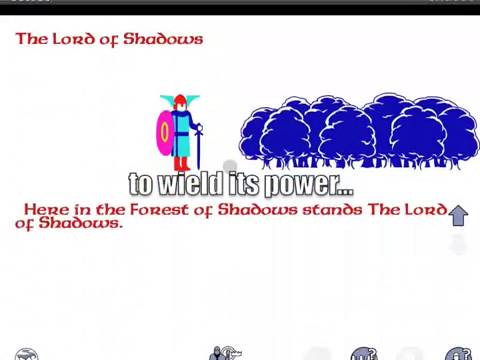
Guiding a single hero across the lands of Midnight isn't enough: sooner or later you also have to raise armies and hold back the hordes of the witch-king Doomdark, and the game's own creator warned, back in 1984, that victory was guaranteed to no one. It's that double duty — commanding one person and commanding an army in the same turn — that has held The Lords of Midnight together since the very first version, built by Mike Singleton for the home computers of the day and now rebuilt for Windows.
The current version arrived on 13 August 2013, updated by Singleton himself alongside Chris Wild. It keeps the original structure — turn-based movement, the freedom to drop into and out of a game whenever you like — but wraps it all in a retro look, at a higher resolution than the screens of 1984 could offer. The package, published by Chilli Hugger Software, also throws in a short novel that tells the story outside the game.
From graph paper to the emulator
In the GOG reviews, the people who loved it say less about the game than about their own childhood. Some remember drawing the map of Midnight by hand, on graph paper, because there was no other way not to get lost; others were only ten or eleven when they first finished the game playing as the character Morkin, and still keep the box, the cassette tapes and the keyboard overlay with the controls printed on it. This isn't the nostalgia of someone who merely spotted the name on a list — these are people who still remember, by heart, the keys for every lord of Midnight.
On the day this version came out, on 13 August 2013, one review was already celebrating that the new edition preserved the original feel while improving the way it played. Years later, in 2020, someone else came back to the game through emulators and ranked it among the favourites of a lifetime of gaming, praising as well the novel and the illustrations bundled with this edition. It's the same admiration told twice, years apart — and it's also what sets apart those who already carry that memory from anyone opening the game now, for the first time.
No translation, no tutorial, hemmed in by Doomdark
The complaint that keeps coming up is the language: one German player calls the controls incomprehensible and asks for a tutorial and a translation that never arrived; a Spanish-language review labels it an interactive novel more than a video game — no audio, English only — and recommends it only to those already devoted to the genre. There's a lot of text, and if English isn't your strong suit, you stall before you even work out what to do.
Those who can stomach the language still run into the balance: one review describes facing the witch-king's armies with an overwhelming multitude ranged against a force that barely fills a handful of squares on the map, walking away from every round feeling crushed — the same Doomdark that fans treat as a challenge of its era becomes, for this player, an impossible opponent. A January 2019 account also records that the game stopped working on a Mac after a system update, in the hope of a fix that, up to then, hadn't come. None of these reviews deny the achievement of 1984 — they all agree it happened; the grievance is about how much it hurts to revisit it today without a single clue.
For those who already know every lord's keys by heart
The Lords of Midnight wasn't remade to win anyone over in the opening hours. It serves well those willing to puzzle out an old interface with no tutorial, who read English effortlessly and accept losing a few rounds before they grasp why commanding an army weighs as much as guiding a single hero — the very people who, decades on, still remember every lord's keys by heart. If you don't read English fluently or run the game on an up-to-date Mac, the wall appears before any enemy army does — and it isn't clumsiness on your part, it's a game that never learned to explain itself. What it asks for isn't just any patience: it's the willingness to learn on your own, the way it demanded in 1984 and demands still.