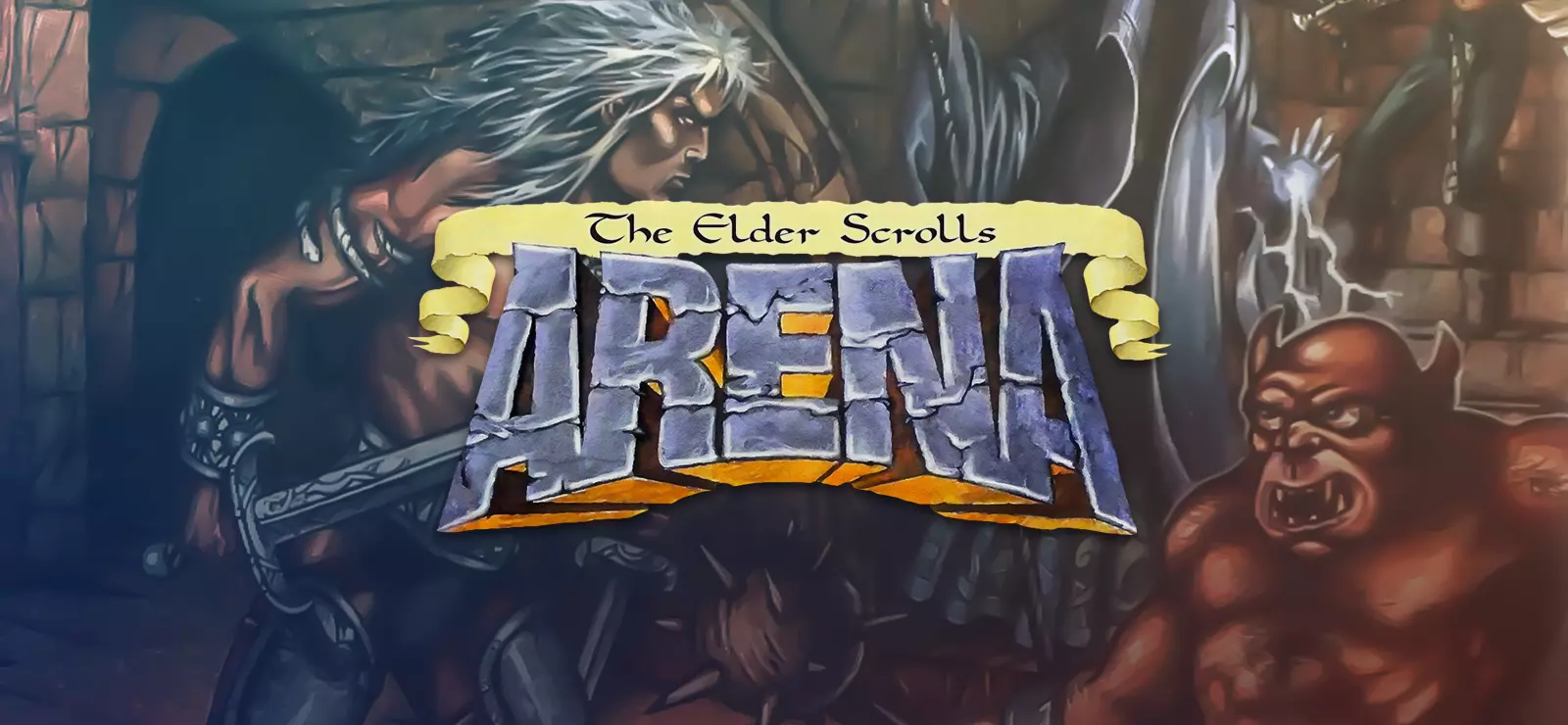
The Elder Scrolls: Arena — the impostor who became emperor
No deadline: it stays in the catalogue until the store pulls it.
Claim it on GOG ↗You claim it in your own store account; Clairo doesn’t claim it for you.
Availability can vary by region.
Before any of the series' famous sequels, this is where Bethesda tested how far an open fantasy world could go — and players still disagree over how much early suffering it's worth.
The impostor who became emperor
Beneath this game's reviews, people are posting updates on a project to rebuild it from scratch. They call it OpenTESArena, say it's close to finished, and even share preview videos. Nobody puts that kind of work into a game that no longer interests anyone.
The story opens in a cell. Uriel Septim VII, emperor of Tamriel, has been banished to another dimension by his own battlemage, Jagar Tharn, who took the face and the throne of the master he had sworn to protect. Tharn killed everyone who saw through the deception — everyone but you, warned of the plot by the spirit of Ria Silmane, the impostor's own apprentice, murdered by his hand. It is she who frees the character from prison and sends him after the scattered pieces of the Staff of Chaos, the only way to bring the true emperor back.
Made by Bethesda Softworks, it's the first game in the Elder Scrolls series, told in first person, with complete freedom to build your character: race, class, attributes and fighting style, from the sword to spells of your own making. The map of Tamriel gathers more than 400 places to visit, among cities, open country and dungeons.
The dungeon that makes you pay, then pays you back
Some people have been playing this opening since 2022 and still describe it as quite a test. One reviewer, writing in May of that year, recalls the first time they played, long ago, back when Bethesda handed the game out for free, then came back years later to give that opening stretch the chance it deserved. The verdict, according to that review, is that Arena has more in common with the classic tabletop games than with any current fantasy video game: you have to build a specialized character, carefully, and pick your way across the map with caution.
Someone who reached the first dungeon in June 2022 sums up the recipe: rest whenever you can, never take on more than one enemy at a time, and search every corner before leaving — that's how they found, right there at the start, a sword good enough to carry for the rest of the adventure. The advice matters most early on: fear the rats, but don't give up on them. In April 2025, another review trades the dread of rodents for the dread of a minotaur — the sound of it bellowing behind the character is the kind of detail that still haunts anyone who played.
Another review, from the middle of 2022, praises the variety of the dungeons and the freedom to break the magic system to your own liking — and in the same breath admits that the wilderness between one city and the next is just empty ground, with nothing to find, and that the game crashes every so often. In December 2024, someone else fixed the problem from the outside: they installed a fan-made mod that remaps the controls to the modern keyboard — W, A, S and D — and only then did the game truly start to play well.
The same dungeon, with no patience for it
Not everyone is willing to pay that price. A review from April 2026 calls the game shallow and dull, describes the enemies as hordes that appear out of nowhere and advance with no plan at all, and recommends skipping straight to the series' sequel — that one, it says, is genuinely good.
Another player, in October 2025, boils the problem down to a single line: old game, awkward controls, easy death — and admits to preferring to watch someone finish it on video rather than face the first dungeon again.
The most thorough critique comes from May 2026: it points out that the game shows its age in the visuals, including the way it portrays its female characters, barely dressed, and that it crashes often. It also complains of hours lost chasing a single quest. But it ends by acknowledging that the combat delivers what it promises, that character creation works well, and that progression follows the logic any veteran of the series would recognize. The conclusion isn't that the game is bad: it's that the games that followed do the same thing better.
For those willing to take a beating before they win
Arena doesn't open its door easily, and the impostor on the throne has no intention of making things simple. Anyone who agrees to step in knowing that — remapping the controls, learning that resting matters as much as fighting, accepting that the map between cities is empty on purpose — finds a world larger than its age would suggest, with a magic system that rewards players who like writing their own rules. Anyone expecting to launch the game and feel modern combat, modern controls and a dungeon packed with content around every corner will quit in the first session, and the harshest reviews show exactly where. Arena doesn't forgive your first steps; only those who come back after them find the real game.