
Szybowcowa '87: inside the underground print shop that outfoxed communist censorship
No deadline: it stays in the catalogue until the store pulls it.
Claim it on GOG ↗You claim it in your own store account; Clairo doesn’t claim it for you.
Availability can vary by region.
Rebuilt from real documents, this hidden Wrocław print shop arrives in virtual reality, splitting the players who tried it between history lesson and propaganda.
A hidden print shop, rebuilt piece by piece
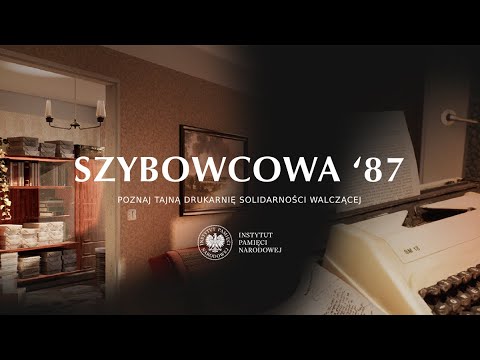
In an apartment on Szybowcowa Street, in the Gądów district of Wrocław, one of the underground print shops of Fighting Solidarity once operated — the movement that printed opposition material under Poland's communist regime. The game rebuilds that apartment in virtual reality: you explore the room, take part in producing the clandestine press on porous paper — banned by the authorities of the day — and listen to intercepted opposition radio traffic.
The documents and objects that fill the set are digitized from original archives, and the game's text exists only in Polish; the release ships in no other language. The store lists the title as a simulation, a historical game and an adventure; made by Pictureworks and distributed by the Instytut Pamięci Narodowej, it landed in January 2025 and remains in early access.
To defend the game is to defend the cause
Those who recommend the game say little about mechanics and a great deal about memory. In a review dated 31 January 2025, communism is described in no uncertain terms, as a historical evil, and the game is cast as an answer to anyone who might try to soften that verdict. Another player, on 23 March 2026, turns a comment into a rebuttal: they write that their own grandparents belonged to the movement and were imprisoned, and they draw on the family's story to argue that the resistance stood against whoever was oppressing the people — German or Soviet — summing up, without naming a single date, the road the country traveled from resistance to the departure of foreign forces from Polish soil. A third comment is more restrained: it praises only the sound. Read the three back to back and what you feel is less a game review than a family testimony.
The fight is over who writes the history
The objections take aim not at what you play but at what the game asserts. On 14 February 2025, one review rejects the historical framing from the outset: to its writer, calling Fighting Solidarity a resistance overstates the case, since no agent of the regime was ever truly confronted by it. Days earlier, on 25 January 2025, another comment goes further and calls the game's tone reactionary, fitting the release into a broader wave of rhetoric against the left. Read the two back to back and you realize the grievance lies neither with the controls nor with the setting: it lies with the caption the game carries. Both reviews steer clear of the digitized documents that underpin the setting — the dispute is over the political reading of the episode, not over whether it happened.
Two barriers that decide who gets in
The first barrier is technical: without a virtual reality headset the game will not run; and without Polish, much of what the game has to say goes unheard — the release comes in no other language. Anyone who clears those two walks onto ground that is already split: on one side, people who take the reconstruction as a tribute to a family's or a country's history; on the other, people who read the same set as propaganda dressed up as a museum. Put on the headset and you are alone in the room, deciding which of the two sides describes what you are seeing. This is not the kind of disagreement a patch settles; it is the very reason the game exists. For anyone willing to enter that argument with their own body, inside the rebuilt apartment, that is the whole point — not a side effect. For anyone who wanted only a quiet afternoon of Polish history, neutrality was never in the box.