Three years of Google Maps to draw a Venice the studio never set foot in
It’s no longer being given away · it costs US$9.99 again
See it in the store ↗This page stays as a record of what was given away.
Availability can vary by region.
The same map that stirs up childhood memories is also the reason players cite most often when they walk away halfway.
A Venice painted by people who have never been there
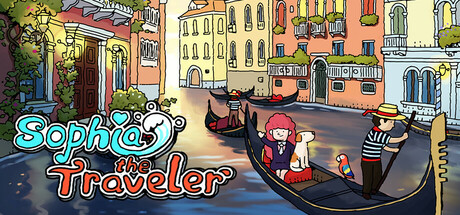
The Chinese studio Memo Gogo has never set foot in Venice. For three years, Google Maps and stacks of travel books stood in for the trip its creators wanted to take and could not, and that is how, corner by corner, the city of canals became the setting of a game. Sophia the Traveler turns that material into a hidden-object picture book: every scene is painted by hand to look, in the studio's own words, like a painting, and tucked inside it are Sophia the girl, Mike the dog, Polly the macaw and dozens of other characters and items the player has to find before turning the page.
The game has ten scenes, all of them inside Venice, and the voice work ranges across Mandarin, English, Italian, French, Cantonese and Min Nan, including the dialect of Fujian province, where the team comes from and whose hometown speech it insisted on recording. No ad mentions that detail, but it points to the kind of handmade care the rest of the game tries to sustain: a personal signature rather than an assembly line.
The studio is already talking about carrying the trip on: the game's own description invites players to vote on Sophia's next destination, among Tang dynasty China, France and the Netherlands. Promising the next chapter while still on the first Venice shows how far the studio means to stretch this character, and how much of the world Sophia has yet to cover.
One scene at a time, and the game unwinds
On Steam, where the game is sold, a pattern emerges in the positive reviews as soon as you read more than one. Players two hours in advise taking small helpings, or the repetition wears thin. Players who reached six hours confirm the ceiling: the opening is fun, but the larger scenes grind down your patience, and in the end only the magnifying glass sorts it out.
A review from September 2026 likens the searching to leafing a childhood sticker album, points out Mr. Bean and Dumbo hidden among the buildings, yet notes that characters and soundtrack repeat from scene to scene: the same piece of classical music comes back more than once. Even so, its author, three hours in, ends up rooting for a sequel. Someone else, with only a few hours on the clock, credits the studio with having done its homework: never been to Venice, but clearly studied the city in depth, the strongest trait in all of the game's art.
The summing-up shared by nearly everyone who recommends it is the same: the art convinces, it is the pacing that demands short, spaced-out sessions. And that very demand, big scene and short breath, is what separates the players who will enjoy it from the ones who will give up, as the reviews that pan the game make clear.
The complaint that comes right back: big map, hint that pinpoints nothing
Not every complaint is about map size. A Portuguese-language review from 2025 says the game ships with bugs and that the studio did not respond when other players raised the same problem on the store's discussion boards. Another, written in 2026, lists scattered flaws: trees planted inside the water, windows that open the wrong way.
The most repeated complaint, though, is the one that already turned up on the side of the players who like it: a map far too big, a hint that pinpoints nothing. One review describes an area with eighty windows in two rows; the dog was behind one of them, and the only clue was that he had gone up. The player who spent thirteen hours with it, more than anyone else on this list, still found the scale unpredictable: a single museum room next to a map stitching six islands together with a bridge, and moving between the two was no fun at all. A final review sums up the physical toll of the problem: your eyes ache from so much scattered across the screen, as if someone had dropped a ring into a pile of rubbish and left you to find it unaided.
The pattern suggests the trouble is not the hidden-object concept; it is the size of each scene and whether the hint can guide the person doing the searching.
For the very patient, in small doses
Sophia the Traveler pays off for players who treat the puzzles like a bedside book: one scene per sitting, at the pace the reviews themselves recommend, with the hand-painted art and the hidden references delivering what they promise. That spaced-out rhythm is what sidesteps the problem raised on both sides: a map far too big, a hint that pinpoints nothing. Anyone who tries to cross Venice in one go, in a single sitting, runs straight into it: the same artwork that moves you in a small scene turns into a treasure hunt without markers once the setting grows. And whoever reaches the end still has somewhere to go, since the studio itself is already promising a next destination, among Tang dynasty China, France and the Netherlands, for those who choose to vote.