Samurai chess: in Shogun Showdown, position beats reflexes
It’s no longer being given away · it costs US$14.99 again
See it in the store ↗This page stays as a record of what was given away.
Availability can vary by region.
Between the player who bails early and the one who can't step away from the board, the difference comes down to whether you enjoy losing your way to mastery.
Losing to learn: how the board works
One player put in 51 hours and walked away calling the whole thing repetitive, too small for the time it had swallowed. Another sailed past 501 hours, still trying one more mix of pieces, with no sign of fatigue. Shogun Showdown lives in the gap between those two numbers: a turn-based combat board where your position and the timing of your strike decide the next move — and whose repetition can hook you or wear you down, depending on who sits down to play.
Each turn you set your position and load up an attack, and the outcome hinges on nailing the moment of the strike, not just picking the right target. The combat pieces grow stronger over the course of a run, they combine with one another, and the final deck — the abilities you carry into the duel with the Shogun — is different every attempt. Losing doesn't shut the door: it reopens the run with what you learned about that obstacle, ready to try again with a sharper read of the board.
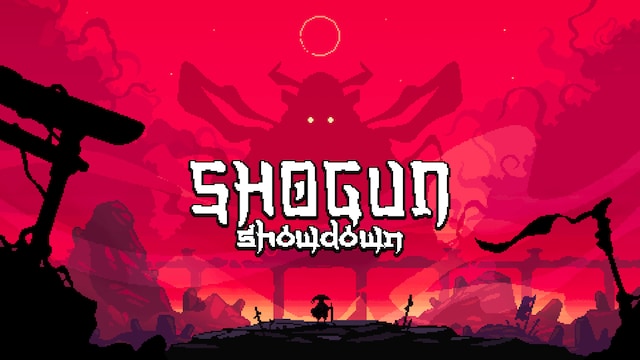
The setting draws on Japan, told through pixel art that favors silhouette and color over detail. The goal of every run is always the same: build the deck of attacks and abilities that can reach the final duel intact.
A year of testing, one name behind the project
Studio Roboatino spent a little over a year testing Shogun Showdown in early access. The full version launched on September 5, 2024, on consoles as well, published by Goblinz Publishing and Gamirror Games. Announcing the date, the developer itself called that year a reward — and made a point of naming the person who drove the project: Mirko, described in the announcement as the developer behind the game.
The announcement came with new content: an extra hero, a fresh stage and boss, and a reworked starting deck — a sign the game kept growing after leaving open testing. Anyone stepping into the current version meets that hero and that stage on their very first run. Even while still in early access, Shogun Showdown had already been nominated for the Players' Choice award at the DIGY Awards and for Most Innovative Gameplay at the Steam Awards, and the specialist press took notice too: Rock Paper Shotgun described the combat as work that rewards those who study their position and only then risk the strike, calling the result polished and possessed of a look all its own.
From a pocket-sized match to endless addiction
On Steam, where the game is sold and rated, players recommend it with room to spare, and dissenting voices are scarce. It's the scene that keeps recurring across the write-ups: you load the strike, gauge the opening, and only then attack. One German player took that literally — 51 hours logged, recorded in September 2026, comparing the combat to a game of chess, only tenser and more fun, with a soundtrack that sounds grand in places.
Others praise the variety of the pieces: each hero plays differently from the last, in a comparison that comes up again and again with Slay the Spire, yet with a character of its own. Some play with keyboard only, some with controller only, and say it works well either way. One father recounted, in a September 2026 write-up, that the game loads fast, lets you clear a few stages, step away, and come back days later without losing the thread — 32 hours piled up that way, a little at a time. At the far end sits the player who passed 501 hours trying one more combination, with no sign of being anywhere near done.
The harshest criticism, though, doesn't come from anyone who hated the game — it comes from someone recommending it. One favorable write-up complains that several weapons lag well behind the rest, making certain builds almost unworkable to assemble. It was written at 36 hours played, in September 2026.
Short for anyone who's seen it all, unfair to anyone chasing the top
Both the player who likened the combat to a game of chess in the previous section and the one complaining here stopped at the same marker: 51 hours played — only in different years, and with opposite verdicts. The negative write-up, in Portuguese, calls the game fun but short and repetitive, little more than a small time-filler, despite the hours already sunk into it.
Two write-ups in Chinese, penned in September 2026, aim at the same target: the higher difficulty, once the game unlocks its toughest challenges. One of those people played 52 hours; the other stopped at 14. For both, the enemies that show up at that stage feel drawn to work against the player: you misread a move, and there's no undoing it — the enemy is already on screen, and the run ends right there.
A third critique, in English, at 13 hours played and recorded in September 2026, goes a different route: it complains the game is forgettable and gets an easy pass from the community, while other titles are held to a stricter standard over launch problems. It isn't a gripe about the board itself — it's about how the game was received.
For those who like losing and relearning — and those who don't
If you enjoy studying your position, trying a new mix of abilities, and starting over without resentment when the board punishes a mistake, you'll find sessions here short enough to fit into a break and deep enough to hold you for many hours on end — the very picture of the player who loads the game, clears a few stages, and comes back days later without losing the thread.
Anyone who plays to unwind without weighing the next move, or who can't forgive losing a good result to an enemy drawn at random on the highest difficulty, runs into the same wall that players with dozens of hours of practice have hit before: the board that once surprised them starts to repeat itself.
In the end, the Shogun only welcomes those who have already lost to him — and come back with a changed deck. Here, losing is the lesson: whoever doesn't like the class doesn't stay.