
Powers in the Basement: Will Phail Heads Down to the Cellar to Salvage His Own Reputation
No deadline: it stays in the catalogue until the store pulls it.
Claim it on GOG ↗You claim it in your own store account; Clairo doesn’t claim it for you.
Availability can vary by region.
A point-and-click adventure whose homage to LucasArts is so faithful that it splits players between those begging the developers never to touch the controls and those grumbling about the clutter of on-screen options.
A missing T-shirt, lazy grandparents, and a basement no one wants to go down into
Will Phail is fifteen and has exactly one recognized talent: being useless. That joke is the seed of the whole adventure — the lazy, spoiled, listless teenager just wants his favorite T-shirt back so he can head out with his friends and rescue an already wobbly reputation, and you're the one steering him through it. Along the way he runs into lazy grandparents, mischievous rats, and carnivorous plants — and he has to scrape together the bare minimum of courage to descend into the basement that gives the game its title, where powers no one understands are waiting to awaken.
Illiterate Code Games builds all of this as a point-and-click adventure that is deliberately old-fashioned, one foot planted firmly in the golden age of LucasArts. The humor is dry and at times surreal, clean enough for a child to play, set in a pseudo-medieval fairy-tale world broken up by anachronisms and geek-culture gags. The store description itself plays along, boasting of three-dimensional graphics and a period soundtrack under made-up names, a wink to anyone who already knows the classics it draws on. On offer are five to six hours of tough brain-teasers, tuned for the kind of sudden insight that strikes in the shower or over the dishes, with the promise that even players who don't care for the genre can reach the end without much grief.
On the store page the game is still filed under early access — an odd label for a title released on January 24, 2024 that keeps drawing, years later, reviews describing its ending. Those who make it that far swear the credits screen holds a gag of its own.
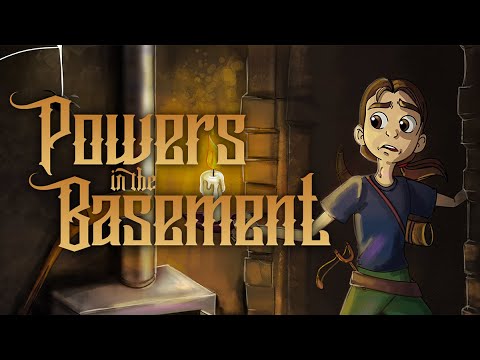
Anyone who grew up on Monkey Island recognizes the signature
On January 25, 2024, one review was already handing out a perfect score. It praised how squarely the game nails the tone of the point-and-click classics, naming King's Quest, Maniac Mansion, and Monkey Island outright and finding in it the same animation style, the same offbeat humor, the same inventory puzzles. The Portuguese-language review, published on May 17, 2025, carries the same fondness: it describes the experience as a return to LucasArts' golden adventures, with humor and irreverence close to the first Monkey Island games, and it laments that the adventure wraps up far too soon.
Not every bit of praise comes without a caveat. Even among those who approved, a frequent gripe concerns the repetitive scenery and the hunt for tiny objects tucked away on screen — if you've ever played a classic of this kind, you know the ritual of clicking every corner of the screen, point by point, to see what reacts. A review from June 23, 2024 goes so far as to suggest the team has the talent for a bigger, more ambitious project, adding with a grin that they might then spend more time fixing bugs than finishing the game. Another detail splits opinion within the very group that enjoyed it: the nine-verb scheme that drives every interaction with the scenery. A review from January 26, 2024 pleads, without a trace of irony, that the team never trade this control scheme for anything simpler — for that player, the more verbs to choose from, the better.
The complaint aimed squarely at what the fans asked to keep
The sharpest criticism goes after neither the comedy nor the look — it goes after the controls. A review from May 3, 2024 picks apart the nine-verb scheme action by action. For that player, you spend most of your time hunting for the right action — the one that isn't the default — while the rest of the list only gets in the way. Two mouse buttons would be enough to preserve the retro feel without multiplying clicks. It's the very same piece of design that, in the section above, someone begged never to change.
Another review, from February 24, 2024, comes at it from a different angle: it finds the plot thin, points to a glut of red herrings, and singles out one particular puzzle — taking apart an item the game itself had you assemble — as proof that the puzzle logic follows no rule other than shoving the player toward a walkthrough. The group's most recent verdict, from February 17, 2026, is the bluntest of the lot: it calls the game a botched copy of the very classics it sets out to imitate and points, by way of example, to a fire-lighting puzzle that only moves forward the instant the game itself decides to allow it — not when the player hits on the solution. These are harsh voices, but lonely ones next to the chorus that praised the same formula a few paragraphs earlier.
Who a basement full of verbs and old-school gags is for
If you grew up trying every combination of items in old adventures, don't mind bumping into a dead end and going off in search of a hint, and have the patience to comb every corner of the screen, you'll recognize the formula and walk away happy with the handful of hours the game asks for. Anyone expecting direct control, with no stack of options cluttering the screen, will end up wrestling with the same design that a share of players beg never to change: the complaint about the nine-verb scheme isn't an isolated tantrum, it's the same objection echoed by those who gave it a shot and quit partway through. Also left out in the cold are those after a dense plot or a long journey — the offering is small on the inside and on the outside, and whoever accepts that scale comes away satisfied, while whoever wanted more comes away longing for a chapter that doesn't exist. The very lock that makes one fan beg never to change the controls is the exact reason another gives up halfway down the basement stairs — and it's in that gap that the decision to install or not really lives.