
Painkiller RTX: a 2004 purgatory rebuilt with real-time path tracing — and not every graphics card can keep up
No deadline: it stays in the catalogue until the store pulls it.
Claim it on GOG ↗You claim it in your own store account; Clairo doesn’t claim it for you.
Availability can vary by region.
Merry Pencil Studios' award-winning mod rebuilds the classic's textures and shadows piece by piece, but it splits the players who installed it between the wonder of the new lighting and the toll it takes on their machine.
New light over an old purgatory
One man alone against the Netherworld, a grotesque arsenal in hand, moving through the corridors of a desecrated cathedral: if you have ever played the opening minutes of the original Painkiller, you will recognize the map without even launching the mod. What changes in this reconstruction is the light. Merry Pencil Studios recalculated every shadow and every reflection in that setting with full-scene path tracing — the method that traces the route of each ray instead of faking it through shortcuts — reworked the materials so they genuinely respond to the light striking them, added volumetric lighting to the environments, and simulated the way brightness passes through the characters' skin.
By the team's own admission, the work is only partial: the product page notes that the reconstruction covers chapters 1, 2 and 3 of the original game for the time being and remains in development. Even so, Nvidia named the result the top entry in its 2025 RTX Remix Mod Contest — recognition for a project born from people tinkering with the game's original engine, the Pain Engine, on their own. Painkiller RTX is not a standalone game: it is an add-on, and GOG itself flags the product page with a mod badge and the requirement that Painkiller Black Edition be installed for it to run.
Released on August 25, 2026, it is first-person shooting and horror with no middle ground, the way the series has always been — only with its sights set on Nvidia's most recent graphics cards.
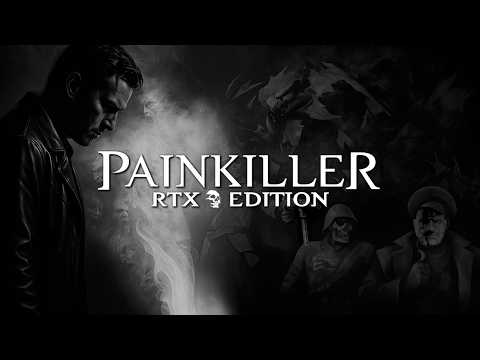
Which game this is a mod of
Painkiller RTX is a mod: GOG states that it requires Painkiller Black Edition. The base game’s article tells what it is.
Anyone who has worked with the original engine can see the craft
Anyone who has dug into the code of an old game engine can quickly tell a crude patch from a serious rebuild. It was exactly that kind of reader, with hands-on experience modifying the Pain Engine from the outside, who wrote on August 26 that the result is impressive even unfinished — and suggested that anyone who found the visuals barely different from the original had probably, through an installation mistake, launched the version without the mod.
The view recurs on other dates. A review from August 28 compares the result to the full 2013 remake, Hell and Damnation, and points out the difference: there the game was rebuilt from scratch, whereas here the physics and logic of the original engine remain intact, and the rebuilt materials favor the 2004 art direction rather than simply making everything shinier. Another player, on a 4070 at 1440p with the settings maxed out, reported complete stability: with the right configuration, you get through the entire reconstruction without the path tracing ever stuttering.
Not every positive experience came effort-free. A player on a 30-series card gave it a 4 on August 28: he had to dial back the path tracing, cap the reflections and turn on Nvidia's own AI image-upscaling technology to reach a playable result, and even then he noticed the frame pacing slip for moments at a time. He recommends it — but with the card tuned, not with the game simply installed and ready.
Outside Nvidia's latest generation, the same engine chokes
For some, the first obstacle was not the purgatory inside the game — it was getting the game to start at all. One player reported, on August 26, the keyboard stuck on a layout different from the one chosen, even after changing the option inside the game — a rating of 1, with no fix found. Another, on the same date, watched GOG's installer freeze at the same point every time, tried again after restarting the store's client, and gave up, asking for a refund.
The most recurring complaint, though, comes from those who finished the installation and felt they got little for how heavily it weighed. A review from August 25, running on an AMD 9070 XT, reports poor performance and complains about the lack of support for the manufacturer's own image-upscaling technology — Nvidia's alternative is no help to anyone without one of its cards. A second, from August 26, compares the result to the 2013 remake, Hell and Damnation, and finds it sharper than this reconstruction; for that player, the installation ballooned well beyond what the original classic took up, that same AI image-upscaling technology left the screen blurry, and generating extra frames through software did nothing for the underlying sluggishness. The light that gives the game's cathedrals their depth back also gives the challenge back to anyone without the right card: none of the four complaints denies what the mod sets out to do — they all come from people who tried to run it outside the combination of card and patience the project demands.
For those who already have the base and the right card
Painkiller RTX is an add-on, not a standalone game: it only makes sense for those who already have Painkiller Black Edition installed and want to revisit those corridors with the lighting recalculated in real time. For that audience, on an Nvidia card from the most recent generations, Merry Pencil Studios' award-winning work delivers the most cinematic version the game has ever had — and anyone who likes the style still has the 2013 remake as another way into the same story.
Outside that combination, the math does not add up. Players on an AMD card run into the missing support that several reviews describe; those with an older Nvidia card have to negotiate fine-tuning — turning down the path tracing, leaning on the AI image-upscaling technology — just to keep the game stable; and anyone hoping for the whole reconstruction finds, for the time being, three finished chapters and the rest of the road still open.