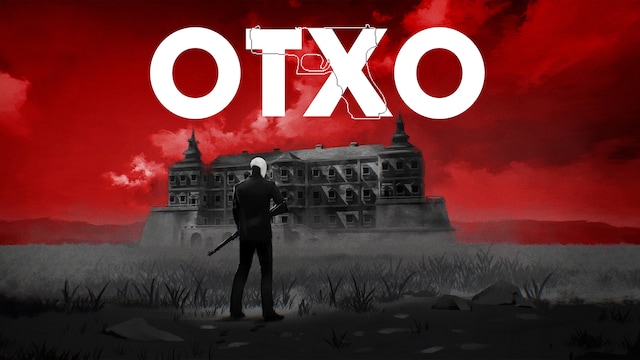
OTXO: the mansion that only makes sense once you forget Hotline Miami
It’s no longer being given away · it costs US$14.99 again
See it in the store ↗This page stays as a record of what was given away.
Availability can vary by region.
The bartender trades every sip for a fresh ability, yet the very Focus that promises the player control is the complaint you hear most from those who walk away halfway through.
The unexplainable mansion and the bar that charges in abilities
You have no name, no face, no memory of how you reached this mansion. You know only why you're here: someone you love waits somewhere inside it, and you won't leave without finding her. The money left behind by every enemy you cut down becomes a drink in the hand of an enigmatic bartender, and each sip buys one of the more than a hundred abilities on offer. Kill to drink, drink to kill better — that's the loop that holds OTXO together, a name its own creators teach you to say oh-cho.
The tool that gets you out of tight spots is called Focus: slow motion that buys you time to dodge a bullet, kick a door in and force your way down the mansion's corridors. The map never repeats, because every attempt deals out a fresh set of rooms drawn from more than 150 hand-drawn spaces spread across eight different areas.
The dark, frantic soundtrack playing behind every shootout isn't licensed from outside: the studio composed it in-house.
Three years on, the game became a vinyl record
On its third anniversary, Lateralis Heavy Industries summed up everything that had happened since launch: OTXO picked up versions for PS4, PS5 and Nintendo Switch, appeared in a limited physical edition for PS5 and turned into a vinyl record carrying the soundtrack the studio composed itself. Along the way came the update nicknamed 666 — a name that also describes the bundle of modifiers, drinks and weapons it handed the bartender all at once.
More than 120,000 people had passed through the mansion by that point, according to the studio's own anniversary post.
The comparison fans treat as a compliment
The rarest thing in the positive reviews is one that doesn't mention Hotline Miami — if you've played that one, you'll recognize the invitation. Most of those who recommend it call this the spiritual successor to the classic and treat the comparison as praise, pointing to the pace of the combat, the range of weapons and runs that hook you without wearing you out. One Brazilian player says he finished the campaign in his first few attempts, with just 4 hours logged on July 26. He comes in with more than 200 hours of Hotline Miami behind him, which is why he strings executions together without breaking his own rhythm — clearing most of the levels without dropping a single chain.
A Chinese player with 178 hours banked describes chasing his own speed record, trying to finish the whole game as fast as possible on every fresh run, and calls the experience a pleasure even in repeated doses. The two things he misses are specific: you can't respawn as quickly as in the game that inspired this one, and there's no support for mods made by the community.
Steam, where the game is sold and where the score and the remarks cited here come from — not the store where it's available now — boils that chorus down to a stamp: Very Positive, backed by an overwhelming majority.
Focus: the tool that's also the complaint
The review voted most helpful among those who don't recommend it has just 4 hours of play logged. Posted on July 29, it argues that the game misreads what made its predecessor work, to the point of undoing fixes that predecessor's own sequel had already made — like enemies that soak up an extra bullet for no obvious reason.
The same review points to repetitive levels within the run-based format, the absence of any melee attack beyond the kick, and enemies tough enough to push you into leaning on Focus just to survive — and that overreliance, it says, warps the very soundtrack playing during the fight.
Two reviews from players who never even gave in to the game point to the same friction: the camera setup. One Brazilian player, his clock still at zero when he wrote, complains about poor camera control and long drinking animations that stall the flow of the action. A Chinese player, after 1 hour, describes a problem in the options that locks the viewing angle right at the start and forces a restart, on top of aiming that won't answer the player's command. The complaint, posted in 2026, points to an old problem still unfixed after three years. Even so, the harshest critics start by acknowledging the soundtrack and the art direction before launching into the list of flaws: the dissatisfaction isn't with the game's surface, it's with what repeats underneath it.
Two exits before the verdict: the camera and Focus
Anyone who walks in comparing every room to Hotline Miami line by line tends to walk out frustrated — it's the complaint you hear most from those who didn't recommend the game, and it resurfaces every time a kicked-in door recalls the game this one is trying not to copy. Play without that ghost at your side and you find the fast, addictive game in short doses that the rest of the audience describes, with a soundtrack even its harshest critics praise.
If you run straight into a bug in your first hour that locks the camera in the settings, you haven't even decided whether you like the game yet — you've only decided whether you're willing to wrestle with the fix before you really play.
What's left is a split no score can settle: half of those who wrote about Focus describe the slow motion as the tool that gives you control; the other half describe that same Focus as the crutch that props the game up. It isn't the game that changes between the two readings — it's how long each player can stand to lean on the same trick before it wears thin.