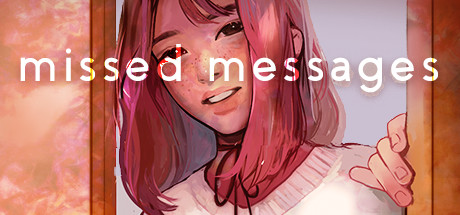
missed messages.: accept or decline a notification that could be a cry for help
No deadline: it stays in the catalogue until the store pulls it.
Claim it on Steam ↗You claim it in your own store account; Clairo doesn’t claim it for you.
Availability can vary by region.
The harshest critique leaves the art alone; what it faults is the way the game blames the player for missing signals that life rarely spells out.
One photo, two choices, four endings
Your girlfriend's phone buzzes with a notification, and the game's first decision belongs to you: accept the photo she sends, or turn it down. Everything that follows grows out of that choice — and the warning the store posts says what is coming: the story deals with self-harm and suicide, and asks anyone who decides to open the app to tread carefully. At some point the perspective shifts, and what looked like a romance takes on a different color.
The interface is a phone's messaging screen, and four possible endings unfold from it. Each run lasts between fifteen and thirty minutes — barely enough time to weigh whether it is worth going back and choosing differently. Inside a heavy story there is still room for memes, light and kind in tone, a contrast the store's own material owns up to. The game runs on Windows, Mac and Linux.
Script, art and distribution come from a single person: Angela He. The game was released on May 30, 2019, and it remains the calling card of an author who writes and draws alone.
Rare, but not silent
You recognize the same feeling review after review: the feeling of having been seen. One review from September 10, 2026, logged with under an hour of play, tells of the game arriving on a night of crisis and of the push that led them to seek help afterward. The same kind of account surfaces in another review, from October 6, 2026: after reaching each ending and replaying whole routes, it ties the story to the loneliness of people who are LGBTQIA+ and have no support from their own family.
The same reaction comes back from players who spent little time with it and were left with little to say about gameplay and a lot to say about atmosphere. One review from October 9, 2026, written after a full hour, praises the soundtrack and the art and sums the experience up as a crossing from tears to an unexpected comfort. Another, from October 8, 2026, measures the author's work against productions far larger and ends up more curious about what she will make next than about the game it just finished.
On Steam, where the game is also available, that row of praise is no isolated exception: the overall verdict leans the same way by a comfortable margin, and the voices outside the chorus are rare — rare, but not silent.
The art is no excuse
One of those voices is an assessment from August 9, 2026, written after less than an hour of play. It opens by granting the very art everyone else praises — and closes by disagreeing with what the game does with it.
The core objection is plain: the game holds the protagonist responsible for failing to read the signals of someone in pain, as though those signals always arrived clear and announced, which this review finds shallow for a subject as heavy as suicide and self-harm. That is the question left with you once the game closes: is reading signals like these really a fair thing to demand of anyone? To the person who wrote it, art handled with that much care deserved writing handled with the same care — and did not get it.
Who should open that notification
On one side, art that understands exactly how to land; on the other, the charge that the player should have seen signals life rarely shows that plainly. Between the two sides, the decision belongs to whoever opens the app.
It is for anyone willing to open a short story that goes straight at its subject and willing to come out the other side moved, maybe unsettled — which is why the store flags self-harm and suicide in the game's own description. It is also for anyone who has felt a family's absence of support first-hand and wants that experience told by a small game rather than a blockbuster.
It is not for anyone after a work that treats the subject with the clinical care it demands: the same review that praises the art also accuses the central message — read the signals of someone who is suffering — of collapsing into a simplistic demand on the protagonist, and by extension on the player. If you already carry that weight in real life, you may prefer not to meet it again, condensed into an ending that settles itself far too fast.