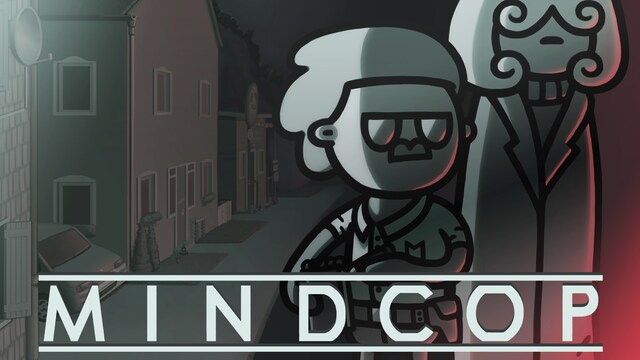
In Mindcop, the detective doesn't question suspects — he breaks into their minds
It’s no longer being given away · it costs US$14.99 again
See it in the store ↗This page stays as a record of what was given away.
Availability can vary by region.
Five days to catch a killer, two possible endings — and the same race against the clock that cracks the case makes a second run through Merrylin Crater Camp wearier than the first.
The clock is the real opponent
Every question you put to a resident of Merrylin Crater Camp eats into the five days you have left to solve the murder that has rattled the town, and the game never tells you up front which ones are worth asking. Heading down the wrong line of inquiry costs exactly what asking nothing would: the time is gone for good, and deciding where to look matters as much as the clue you eventually find.
When a suspect shuts down, detective Mindcop can do something no other investigator can — step straight inside the person's head. The conversation freezes and turns into a real-time match-three puzzle called Mindsurf, which opens up the witness's so-called Sea of Thoughts; that is where the clues and the fresh lines of questioning come from, each one reopening the interrogation from a new angle. Cracking the case depends as much on beating that puzzle against the clock as it does on asking the right thing.
Mindcop was made by Andre Gareis and published by Dear Villagers, and the studio itself, at a Steam event built around games that run under five hours, called it a case that plays out from beginning to end without ever dragging. The same story picked up a nomination at the 2025 LATAM Indie Awards in the Narrative category — and it wraps up in two different ways, depending on how the player spent the time getting there.
The wit that lands without cheapening the crime
A player who spent ten hours on the case, writing on August 28, 2026, singled out the character design: bold, sparse lines, almost like a comic strip, set against lavishly painted backdrops. That contrast carries the game's tone — a comic beat lightens things just as you start taking the crime too seriously, yet the murder itself is never played for laughs. Another player, four hours in and writing on August 30, 2026, put the same feeling more bluntly: short, but with atmosphere and style to spare.
The plot ties more than ten characters together through overlapping secrets, according to someone who closed the case on September 4, 2026 after ten hours — room enough for real-world satire and for jokes that slip out from under the murder's gravity, so much so that the player admitted to burning whole rounds of questioning just to dig for gossip rather than evidence. That same day brought another account, this one at eight hours, calling the game underrated: the solution takes genuine thought, and guessing your way through without paying attention carries a real price — the killer gets away.
Some are already thinking sequel: an eight-hour player, writing on September 13, 2026, described the story as a crime in a holiday town that hides more than it lets on, cut from the same cloth as guess-the-culprit films, and said he is rooting for more from Mindcop and his partner, Linda. Another account, seven hours in on September 1, 2026, described playing with a notebook to hand, jotting down suspicions, and stressed how much care it takes to ration your time across each suspect's questioning. And it is no one-off impression: on Steam, the store these same write-ups come from, players tend to walk away won over, and the dissenting voices are few. But one of the most enthusiastic accounts carries a caveat trailing behind it — someone eleven hours in, writing on September 2, 2026, summed up the bargain neatly: he stands by the game even knowing that part of what it hides surfaces only on a second visit, and that this second visit was never built to be enjoyable.
The gripe that unites fans and detractors alike
The most torn of the lot was a six-hour player writing on September 2, 2026: praise for the art, the soundtrack and the atmosphere, the Mindsurf sequences called daring and unlike anything else on screen, a real pull to find out who the killer was — and, even so, no firm verdict on whether to recommend it. The story was not the problem; the clock was. It is all too easy to pour your entire allowance of time into the wrong trail, and after two playthroughs it becomes plain that most of the objects you inspect lead nowhere — each house hides only one or two things that actually matter.
The same complaint turns up at the other end of the scale, dressed differently: the player who hit six hours on September 14, 2026 warmed to the cast, flawed in all the right ways, but admitted that going back to comb through what he had missed grows tiring without a better way to save progress — which is why he has yet to try for everything. The game asks for a second pass to reveal what the first kept hidden and to reach the other ending, yet hands you no tool to make that easier: curiosity runs straight into the very shortage of time that makes the first investigation work.
For note-takers, not trophy hunters
Mindcop rewards the player who likes to crack a case alone, notebook at the elbow, playing contradictions off one another — the sort who would rather finish a whole story in one sitting than string an investigation out over weeks. The handful of hours the case takes inside the fiction is about what it takes outside it, too: you can solve the murder, watch how it ends, and switch off with a clear conscience.
The player it will not suit is the completionist: the two endings and everything that only surfaces on a second pass call for repetition, and all a return trip guarantees is spending the same scarce time over again, with no hint as to which corner of the map is worth revisiting. A good detective puzzle tends to reward the player who comes back; this one charges the same toll twice.