
In Eschalon: Book I, the freedom to build your character is the game's first trap
No deadline: it stays in the catalogue until the store pulls it.
Claim it on GOG ↗You claim it in your own store account; Clairo doesn’t claim it for you.
Availability can vary by region.
A turn-based game that channels the rigor of the old computer classics and shows no mercy to anyone who botches their character right at creation.
A note, a strange town, and a map you draw yourself
You wake in a strange place with no memory of who you are, holding nothing but a hastily scrawled note telling you to find a stranger in the nearest town. That is the single thread Eschalon: Book I pulls from start to finish: figuring out who you were before you lost your memory.
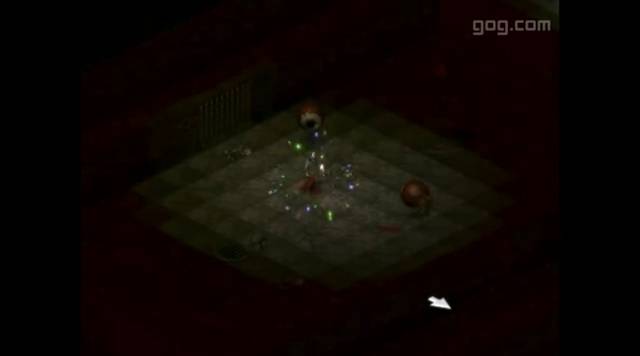
From there the game is turn-based and single-player, built on an open world that descends into ever-deeper dungeons. Basilisk Games, the studio that also publishes the game itself, designed it with an eye on classics like Ultima and Might & Magic: skills and attributes shape every action your character takes. There are 24 skills and 8 attributes to build them with, and treasure rolled fresh each playthrough means no two journeys hand you the same loot.
The people who recommend it also learn to hate their own computer
The most-remembered review from the launch, on May 7, 2013, nailed the argument that still gets repeated today: the plot is the usual thing, but the game's strength lies in wandering the world and fighting turn by turn against whatever crosses your path. You spend hours with no fixed destination, and the map that fills itself in becomes the quiet trophy of each session — for a review from May 12 of that same year, the cartography skill alone was enough to keep a player glued to their chair. One player who reached 30 hours, in October 2013, praised how sharp the isometric graphics looked next to other classics of the genre, and reported reloading a saved game just once in all that time.
But recommending the game spares no one its flaws. One player, in 2014, reported that saving fails on multi-core computers and wipes out the progress folder — the workaround is to recreate the folder by hand and hope it doesn't happen again. Another, who finished the adventure in 14 hours, hit a bug that kept a key from appearing where it should and needed tricks from outside the game to avoid being stuck there forever. Even so, they closed the review saying they wanted to move on to the next books in the series.
The same freedom that delights is the one that tightens the noose
The complaint repeated most by those who didn't like it is that the classic-of-the-genre label comes at too steep a price to be fair. The review readers themselves flagged as most helpful, published on May 7, 2013, the very day of release, argues that melee combat forces you to specialize your attributes to the extreme — anyone who doesn't dies, and dies often, especially with the frailer classes. You pick the bow at character creation and feel the cost a few steps later, when the ammunition runs out and all that's left is to run. The gripe comes up again in a 2014 review: without betting everything on one weapon type and on dexterity, the game punishes you without mercy, and the warning that the difficulty has spiked arrives only after your own death.
That imbalance shows up in the details too: a 2015 review describes spending 20 arrows to kill a single wasp, in a game that starts well and turns into tiresome repetition the moment the difficulty curve tightens. A review written in Polish, from 2021, sums up the problem from another angle: much of the playing time is spent not fighting but resting and saving progress between one battle and the next. None of these reviews denies what the game sets out to do — they all agree that the same freedom to build your character at the start is what, later on, tightens the noose around anyone who chose wrong.
For those who like dying until they learn — and for those who don't
Eschalon: Book I serves well the people who miss the old computer games that explain nothing and demand full attention when it's time to spend your points: anyone who enjoys that kind of challenge recognizes the recipe of Ultima and Might & Magic in every skill chosen and every dungeon explored. If you like deciding everything yourself and paying dearly for your own choices, the world opens with no hurry at all to take you in — and the cartography skill alone is worth hours to anyone who likes filling in map after map.
It won't serve those who want story front and center — the amnesiac's search for himself is only the pretext for opening up the world — nor those who can't stand losing to their own character. Building the character wrong here doesn't delay victory: it denies victory. That's the audience this game will never win over, no matter how many skills it offers.