
Endless Sky: six hundred hours in space, built by a single programmer
No deadline: it stays in the catalogue until the store pulls it.
Claim it on GOG ↗You claim it in your own store account; Clairo doesn’t claim it for you.
Availability can vary by region.
The game promises a story that wraps up fast, but those who came aboard don't tell the same tale — and the difference lies in how long each one stayed at the helm.
One man alone, an entire fleet to command
Michael Zahniser stands alone as both the studio and the publisher behind Endless Sky, and yet he delivered a galaxy of hundreds of star systems and several alien species, each with technology of its own. You start out in a humble ship — a rickety shuttle, a freighter or an entry-level fighter — and work your way up to commanding a fully customized flagship or an entire fleet built for war or for cargo, choosing among more than fifty ship models and several hundred upgrades to fit onto them.
The money comes in by ferrying passengers and cargo, escorting convoys, hunting bounties or raiding and capturing enemy ships. You can throw yourself into the civil war running beneath the story, or ignore the plot altogether and just explore space, blasting pirates as you go.
The main campaign promises to wrap up in eight to sixteen hours, but that's only the front door: the game is free and open-source software, running across Windows, Mac and Linux, with a plugin system open to anyone with a text editor and a drawing program, and a galaxy editor for those who want to lay out new systems and planets. Released on January 26, 2024 and still listed as early access, it's tagged as action, science fiction and adventure — three labels that fit the player who wants to shoot as much as the one who just wants to trade.
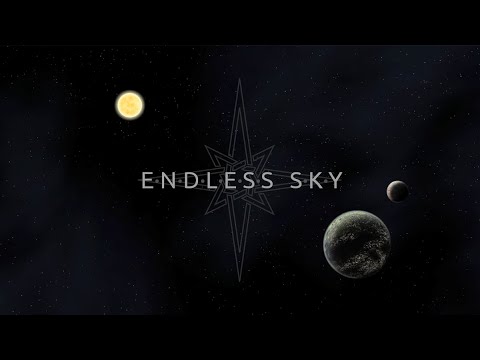
Six hundred hours in, and there are still systems left to see
Those who stick around fall into the same habit: you land on a planet, hit the spaceport button and you're already reading another slice of story before setting off again. In a review posted on January 28, 2024, a player with more than six hundred hours logged says the routine never feels repetitive — every gain lands like a level-up, and every planet holds a piece of plot of its own. He never grasped why the team never charged for any of it, given that they keep shipping update after update.
Another player, in a review dated February 3 of that year, carried the same addiction over to the game's mobile version and likewise lost count after a good few hundred hours there — for him, it's one of the best space-captain simulators he's ever played. A review from January 28, 2024 swaps the comparison around: instead of the three-dimensional simulation of the classic space-flight games, here the map is two-dimensional, and the planets are placed one by one rather than rolled out by an algorithm, each with its own thread of story. Someone else, also on January 28, 2024, calls the game a successor to the classic Escape Velocity Nova, finishes the main campaign in ten hours and still finds two more long campaigns under construction, on top of the short stories scattered across the map.
Not every five-star rating comes without a caveat: the same six-hundred-hour review drops one lone gripe at the end — the game's save menu never felt intuitive to him — and the player who calls it a successor to Escape Velocity Nova misses having a soundtrack of its own. That's the price this crowd is willing to pay: a rough-edged interface in exchange for a galaxy that never repeats itself.
When the controls seize up and the math doesn't add up
The harshest criticism isn't about the graphics or the story — it's about how much the game works against the person in command. In a review from April 21, 2026, after many hours of play, the player says that certain situations throw the full weight of the physics against your own ship, and that it was on the team to tune this better.
A more technical review, from July 27, 2025, lists what breaks: you try to steer with a controller or by clicking and nothing changes, only the keyboard responds; targeting asteroids stops working; the fire button vanishes mid-game; the cursor jams on the map screen and forces you to restart the whole game. The same person complains about the math on one particular mission — the advertised payout is swallowed by the cost of crossing the systems along the way — and boils the travel routine down to just two buttons, one to jump on its own and another to land on its own, repeated system after system.
A third review, from April 18, 2025, rounds out the opposing camp without naming a single bug: for its author, the game only appeals to those who already like trading simulators, and boredom set in after two hours of play. It's the same yardstick that separates the two sides: it isn't the genre that decides who stays, it's the patience to learn a whole economy before it pays anything back.
The debt that separates those who stay from those who quit
You show up expecting a shortcut to action and trip straight over Endless Sky: in the complaints on record the controls never leave the keyboard, the cargo route demands planning, and the money is slow to come in until the first good ship shows up. Those who accept that rhythm — the same one that carried one reviewer to six hundred hours and another to a good few hundred on the mobile version — find a galaxy that never repeats itself, with hand-placed systems and a plugin editor ready for anyone who wants to design their own ships or destinations. The line dividing the two groups isn't whether you like science fiction: it's the willingness to learn a whole economy before it starts to pay off. Those who've been through this kind of game spot the curve from a mile away; those who just want to shoot at something quit before paying off the first debt.