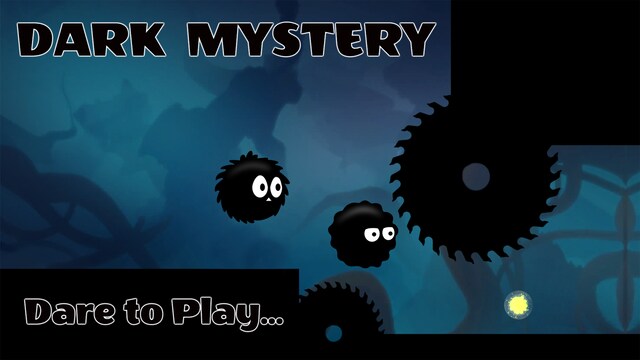
Dark Mystery: the queen has vanished, and players can't agree whether saving her is easy
It’s no longer being given away · it costs US$6.99 again
See it in the store ↗This page stays as a record of what was given away.
Availability can vary by region.
The store page promises a thinking game; players describe it as anything from a kids' stroll to a test of patience — and they all trip on the same jump.
A furry creature, a queen lost in the Dark World
A queen has gone missing in the Dark World, and the one sent to bring her back is a furry creature you pick from a roster of characters that differ only in looks. Along the way lie 35 levels of traps, buttons, platforms and boxes, each harder than the last, according to the game's own store page.
The store pitches it as a puzzle platformer with simple controls and split-screen for two players. It came out in 2017 from the studio Yash Future Tech Solutions Pvt Ltd, which also publishes it, and runs on Windows. Take that description with a grain of salt: what players argue about is precisely whether it's a puzzle game, a children's stroll or a test of patience.
Cute on the cover, brutal once you play
On Steam — the source of the store details and the opinions cited here, not the store that distributes the game — players were split, with a slight edge to those who liked it. What unites that camp is the shock at the difficulty. A Brazilian player with 3 hours on record, writing in 2020, warns that anyone who calls the game cute is mistaken: your brain works at full stretch, there are a lot of levels, and one mistake means starting over. A Russian player with 2 hours, writing in the game's first days in 2017, says it isn't even a puzzle game, just a pretty platformer that can at times be teeth-grindingly hard.
Those with more hours are less rattled. A player with 11 hours, in January 2026, describes a modest ambition: a bare-bones story that is little more than a pretext, and a loop of levels kept up consistently. Another, with 5 hours in 2024, finds the game easy and full of simple achievements, and suspects it was made for achievement hunters.
Even the fans stumble over the same thing: the jump. To jump higher you have to press the button several times in a row, and the Brazilian player asks the developers to improve the creature's jump, because landing on the exact spot takes luck. So the praise for the challenge ends in a trade-off: whatever the game gives in difficulty, it takes back in the controls.
Where patience runs out: the box in level 11 and the spikes in level 20
Those who gave up early go after the same weak spot, only without mercy. One player with 3 hours, in 2018, saw potential, catchy music and a game young children could handle — as long as they hadn't reached the spring-box puzzle. They found no way to quit the game other than killing the process in Task Manager, complained that the character sticks to walls when jumping into them, and called the box in level 11 near impossible.
A Korean player with 2 hours, in 2019, is blunter: checkpoints, the jump and structures that barely deserve to be called puzzles all follow the same arbitrary logic, and the spikes on the reversed conveyor belt in level 20 would have almost anyone quitting the game in a fit of cursing.
There's a pattern here: the harshest complaints don't come only from those who hated it. A player with 4 hours, in 2018, left a grudging thumbs-up and found the whole thing merely passable, with little creativity, little variety and code that needs a good cleanup.
For players who can put up with a stubborn jump
One thread ties all these voices together: the game promises brainwork and often delivers repetition and reflexes, while the cuteness of the creatures suggests a stroll that isn't there. If you like platformers where a mistake only costs you a level restart, and don't mind a jump that takes persistence, you'll find 35 short levels and a challenge that keeps growing. As for two players on one screen, a Russian player warns that the mode won't open without two controllers connected.
If you're expecting real puzzles, or get annoyed by physics that stick to walls or by a game you can only close via Task Manager, you'll give up at level 11 or 20, where the complaints pile up. Young children can keep up with the early levels but may get stuck on the spring box.
The creature's cuteness is the wrapping; what the game demands is a jump that obeys when it feels like it.