Five languages to crack, one tower, no translator
It’s no longer being given away · it costs US$7.99 again
See it in the store ↗This page stays as a record of what was given away.
Availability can vary by region.
The notebook takes every guess you give it, but the tower punishes anyone who wanders without a map.
A notebook meant to be filled with mistakes
There's no translate button in this tower. There's a notebook, and the game expects you to fill it with wrong guesses.
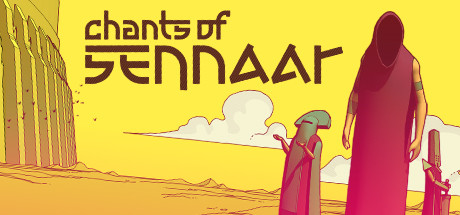
You play the Traveler, climbing a tower inspired by the myth of Babel: five peoples who stopped speaking to one another, cut off by fear or mistrust. Each people has its own script, and every floor has its own look, technology and architecture. To move on, you watch, listen, talk and jot down symbols, and sooner or later a glyph's meaning surfaces from context. The languages are the lock and the key at once.
The art draws on European comics, and Thomas Brunet's score carries the climb. Rundisc released the game in 2023, and in 2024 it won a best independent game award in New York. Yet what players talk about is almost never the award: it's the moment a symbol stops being a scribble.
The moment a scribble becomes a word
On Steam, where the game is sold and where everything you read here about the people who played it comes from, the chorus is one of satisfaction, and dissenting voices are rare. What stands out is that players describe almost the same scene.
Those who finished the story in 9 or 10 hours describe the loop: you write a guess in the journal, realize the translation makes no sense in that context, erase it all and try again. Then the pieces fall into place and putting it down becomes impossible. Someone who reached 22 hours offers advice that keeps coming up among fans: go in blind, because discovery is a big part of the game. One player with 21 hours, in 2025, saw the tower as a fable about what happens when no one understands anyone else anymore, not even themselves. And someone who played the whole thing in Portuguese vouches that the translation loses nothing along the way.
There's also praise from people in the trade. Someone who studies linguistics said the game is good, but every symbol reminded them of overdue assignments, so relaxing was out of the question. An archaeologist said it rekindled their love for the profession at a tough time for the job market.
The praise comes at a price, though. The pleasure lies in being lost for hours, and not everyone calls that pleasure: one player with 9 hours, in December 2025, describes the process of correcting yourself over and over as close to torment, and that is precisely what stuck with them.
Long corridors and a notebook that corrects you
The complaints don't go after the core puzzle; they go after everything around it. The harshest comes from someone who wanted to love the game: a linguistics fan with 8 hours found the languages too simple, two of them lacking any distinctive trait and the last one all but deciphering itself, and missed the richness the premise promises.
Another player, with 1 hour, expected to build their own definitions over the course of the adventure and was annoyed to see the notebook swap them, with every puzzle solved, for the developers' definitions. For a game that opens by talking about how fluid language is, it felt far too rigid.
The second sore point is walking. There's no map, the scenes are large, the camera crawls along the edge of the screen and the character trots from door to door. One player with 3 hours who only plays an hour a day says they spend the first part of every session remembering the way. In March 2026, someone with 8 hours wrote that the game would work better as a point-and-click adventure. Even a fan with 12 hours admits the back-and-forth gets tiring, but says the music and the visuals made them willing to forgive it.
A third warning is of a different kind. Two players, in November 2023, point out that the terms of use, which you have to accept to open the game, provide for the collection of personal data, and that declining sends you back to the main menu. Whether that matters is your call; the clauses are worth reading.
For those who can stand crossing out what they wrote
The game demands one thing and gives back another, and that trade is where you make your choice. It demands that you get things wrong in silence, return to your own scribbles, roam large settings without a map and accept that the notebook sometimes has the last word. What it gives back is the rare pleasure of figuring out, on your own, what no one translated.
If you enjoy patient deduction, crossing out yesterday's notes and watching estranged peoples start talking again, you'll feel the tower is worth every floor. If you have an hour a day and a poor memory for routes, if you're expecting a real lesson in linguistics, or if you won't accept a data contract, you'll give up early, and with good reason. With no translator, the tower opens only to those who can bear being lost.