Betrayer: an English colony that lingers only as ghosts
No deadline: it stays in the catalogue until the store pulls it.
Claim it on GOG ↗You claim it in your own store account; Clairo doesn’t claim it for you.
Availability can vary by region.
Brought back after vanishing from the store it called home, Blackpowder Games' historical horror splits newcomers down the middle: the very atmosphere that holds you for dozens of hours drives off anyone after a quick answer.
A compass with no north in 1604 Virginia
You step off the ship expecting to bolster an English colony on the shores of the American Atlantic, and you find silence. It's 1604, the colony is gone, and the land around it has been drained of color: there's no answer left about what became of the settlers, or of the peoples who lived there before them. The investigation moves from clue to clue, and what hunts you across this empty land are corrupted conquistadors and shadows that stalk without a sound.
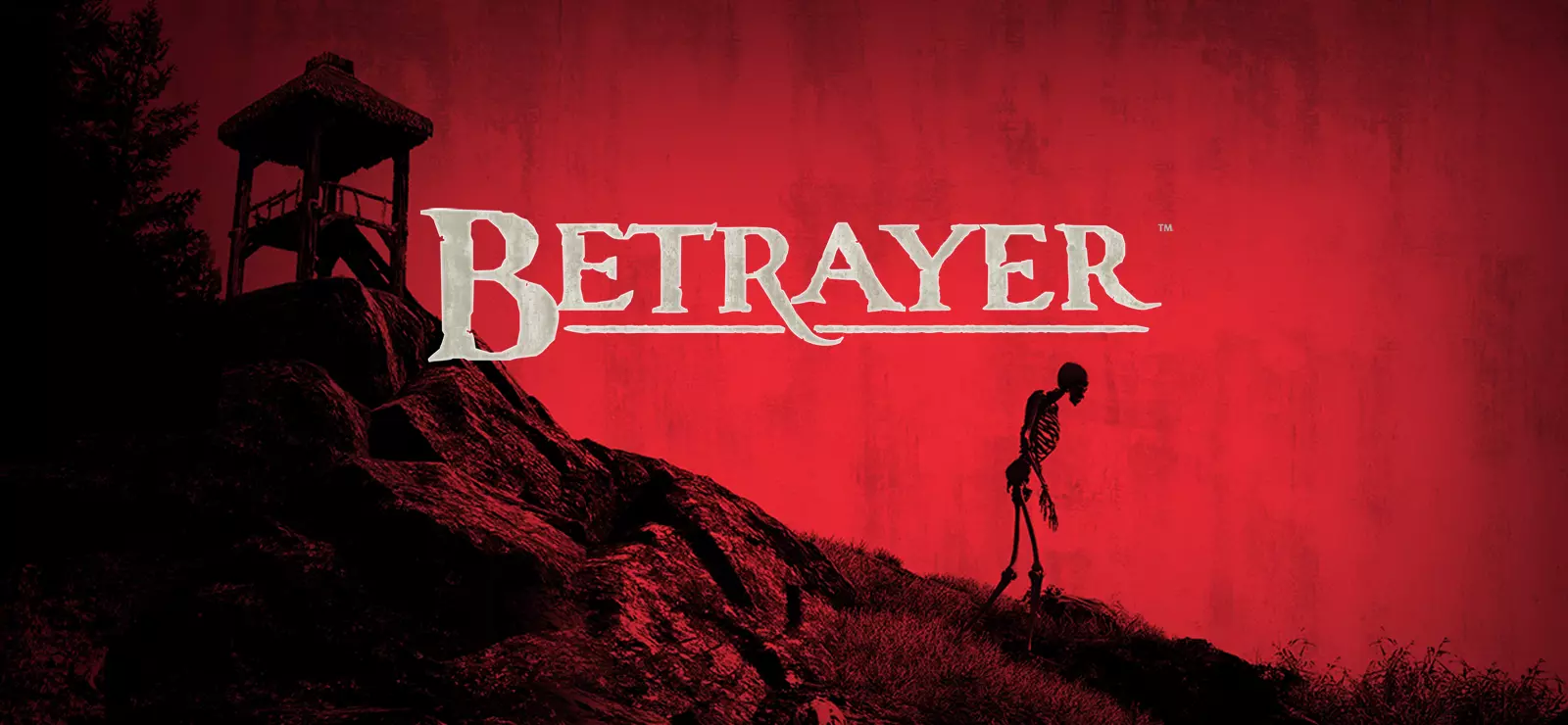
The map exists in two states — the ordinary world and a spectral version of it, each with threats of its own — and how you cross that territory is up to you: with muskets, bows, crossbows and hatchets, swapped for faster, truer or longer-ranged versions as you buy or find better weapons along the way. You can blend into cover in plain sight of the enemy and use the wind to muffle your own footsteps, and talismans round out the character, from greater stamina to quieter steps. By default the palette is almost entirely black, white and red, meant to make everything more unsettling, but the game unlocks color and contrast adjustments for those who'd rather have less weight and more landscape.
Behind it is Blackpowder Games, a studio built by people who had worked together years earlier at Monolith Productions and decided to keep making first-person action games afterward — with no larger label behind them: the group distributes the game itself.

The sound that makes the silence weigh more
The wind tugs at every tree around you and you can't tell whether that distant bell is calling you in or warning you off. That was more or less the first impression of those who arrived the day the game returned to the store, on July 10, 2023: the title had disappeared from Steam over an ownership dispute — according to those who remember the story — and its return by way of GOG was welcomed as a rescue. After that, the same thing keeps coming back in the praise: the sound — ghostly voices calling to be found, the echo of armor, the crack of lead finding its mark. A player who finished the whole game in 35 hours, in August 2025, describes the feeling as something rare: silence and sound fitted together in a way they'd never found anywhere else.
The criticism the fans themselves make is always the same, and it's an honest one: after the tension of the opening, the pattern repeats — you enter a new area, restore the bell in the spectral world, help a ghost remember, cleanse the place of the same corrupted conquistadors and shadows that opened the story, and move on to the next area. Those who finished it own up to this without hiding a thing: one such player wrote, in August 2023, that plenty of people complain about the repetition and, in the end, they're right.
Ten minutes and the certainty of not going on
Not everyone is willing to wait for the atmosphere to make up for the rest. You go in without knowing who your character is or what you came to do there — that's what one player set down in May 2026, walking away from the game before the ten-minute mark: they found the world dull, the combat sluggish, and uninstalled on the spot. The same complaint turns up in other voices, months and years apart: the interface, the inventory and the quest tracking weigh against the story, even for those who praise the look.
One complaint filed in April 2025 goes so far as to grant that the black, white and red style holds up even for a title with years on the clock, but it stalls right where the game asks for patience: after you save your progress, there's no option to pick up where you left off. It's the one thing even the harshest critics don't attack: the look. What they won't forgive is the combat, and that's where the real split lives — between those who accept the slow pace and those who only wanted a good fight.
For those with patience for the silence, not for the trigger
Betrayer is for people who like to walk unhurried after a clue, to let the mood do the work the combat doesn't, and to tune their own screen until they find the pitch of fear they can stand. It's not for anyone who wants decisive action from the first minute — those who abandon the game early are always the ones who expected an immediate answer about where they were and what they were fighting.
The choice is a simple one: those who accept walking blind for a while gain the best of the game; those who don't give up before it arrives.