The rhythm bar that stands between you and the bunnies at the table
No deadline: it stays in the catalogue until the store pulls it.
Claim it on Steam ↗You claim it in your own store account; Clairo doesn’t claim it for you.
Availability can vary by region.
Ten minutes of tense dinner about life as the eldest daughter, and the harshest criticism comes from a player who nearly recommended the game.
An affection meter that fills to the beat of the talking
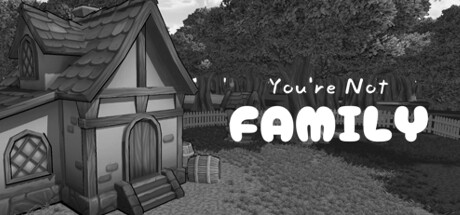
The store page promises cute bunnies in the dinner scene; the player who gave the game a thumbs-down says straight out why those bunnies never turned up on screen: the rhythm bar takes the exact spot where your eyes ought to be, between the display and the table. That is the central irony of You're Not Family, a narrative rhythm game by Atiya Nova that invites you to a week of dinners with your parents and your brother, tapping keys in time with the conversation to fill the family's affection meter and move on to the next round. Underneath the mechanic sits the experience of being the eldest daughter, and the studio itself makes it clear, wryly, that none of this is comfortable.
The whole thing runs ten minutes of classical music and a fair amount of dread, in the studio's own words, and its cuddly three-dimensional look is set deliberately against the heavy business at the table.
A hand-written patch, soon after launch
On November 24, 2023, Atiya posted the notes for the game's first patch and mentioned that this was the first update ever shipped for any game of theirs. The text clears up small faults, adds an opening explanation of the mechanic to the options menu, and promises to look calmly into a control problem a few players had reported. Read those notes and you see a one-person studio learning in public how to take care of a game once it is out.
Family, boiled down to a line that crosses languages
Among the players who finished it and spoke up on Steam, approval is overwhelming and the voices against are scarce. The first two bits of praise landed in October 2023, days after launch: one player saw a story with promise behind the short running time and bet that the rhythm mechanic, given more care, could go far beyond what it delivers. The other boiled the game down to a single idea: blood counts for less than the company you choose to keep close. In May 2026, a piece written in German read the game as an attempt to work through something personal to Atiya, and voiced the hope that Atiya had got there. It is the kind of line that stays with you long after you close the game.
Almost a recommendation, held back by the interface
If you play rhythm games for the precision of the hit, the mismatch will probably jump out at you right away. The one dissenting voice, posted in June 2026, does not reject the idea; it rejects the execution. For whoever wrote it, the fit between the keys and the beat of the music drifts out of time, as though the note pattern had been laid down carelessly, and the rhythm bar covers precisely the part of the screen where the bunnies of the scene are, so much so that the player never once managed to look at them across the whole playthrough. The conclusion is not a no. It is a hold. The recommendation stays parked, pending those two fixes; once they land, a full recommendation is promised.
Who those ten minutes are worth it for
You spend little time and hand back a lot of attention: if what you want is a short, personal portrait of family tension, told through key presses rather than long dialogue, the idea here works well enough to split opinion in two languages and across different years. If you want precise timing in a rhythm game, you will trip at the same spot where the most attentive criticism tripped, on the beat that slides off the tempo and on the bar that hides the bunnies meant to be the centre of the scene. The small irony stays: a game about paying attention to your own family that, through a flaw in the interface, keeps you from paying attention to the only cute characters at the table.