The name owns up to it: just another zombie game
It’s no longer being given away · it costs US$3.99 again
See it in the store ↗This page stays as a record of what was given away.
Availability can vary by region.
Solo, the base falls early — the game only pays off with people you trust holding the trench beside you.
Days for prep, nights for the apocalypse
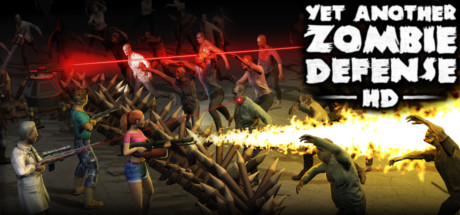
The name owns what the game is: billed as just one more right there on the cover, it promises no reinvention, only to do well what the genre already does. Every round swings on the same hinge. By day you raise barricades, buy weapons at the base shop and plant turrets where they count; by night a horde bigger than the last one closes in and leaves little besides you and the trigger.
Three formats organize that hinge. Defense mode fixes the base in place and every wave demands more structure; Endless has no finish line, only the question of how long you can hold; in Deathmatch the players themselves become each other's targets, fighting for the top of the scoreboard. Four people at most share the trench, whether side by side on one screen or linked over the network — and that number decides whether the night ends in laughter or in silence.
The studio's own synopsis treats defeat as a given: the horde outnumbers any defense, and sooner or later the player's turn comes. The game promises no happy ending — it promises a beautiful one, and leaves each group to decide how long the base is worth holding.
A family that kept growing
Awesome Games Studio kept the game alive long after release. In one of its noticeboard posts, the studio describes adding a sandbox mode for testing: unlimited money and ammunition, every weapon unlocked from the start, and the option to pick any night of the climb to try out a loadout without replaying everything from the beginning.
Technical support carried on after that as well. Some time later the game's graphics engine jumped two versions — the kind of upkeep an indie production rarely gets long after launch. Handy for anyone arriving well after the premiere: you still find recent fixes, not just the game as it shipped on day one.
The most recent post confirms the studio already has the full version of Yet Another Zombie Survivors on the way — the next chapter in the same zombie family it carries in its name, proof that this is not a house that ships and forgets.
The praise that survives hundreds of hours
Players who arrive with low expectations tend to leave satisfied. You grasp the objective in minutes, with no long tutorial ahead of you, and that counts in the game's favor from the first session. More than one write-up calls the formula simple but fun: building by day and shooting by night raises a laugh even with little variety around it, and the escalation holds interest across round after round.
The strongest evidence comes from the people who poured far more time into the same place. One profile reached 710 hours played, and even after that much time invested the verdict does not change: there is no campaign to tell, only the question of how long you last through one more night, and repetition shows up as the price of simplicity rather than a surprise.
Others prefer smaller doses: one write-up christens the game a basic but functional time-killer, good for filling a short session without demanding commitment. And it is in a group that the piece falls into place — players who sit down alongside friends call the base forgettable on its own, yet in company the chaos of the defense becomes the whole reason to keep going.
Two versions, one doubt about what changed
The sharpest complaint is not about a technical fault: it is about what separates this version from a simpler edition that has circulated for years under the same name, minus the HD suffix. One player with 13 hours logged, who had already written up the original edition, boils the difference down to the price and three extra letters in the title — nothing more — and recommends neither.
Frustration turns up away from the stats screen too. One account describes an evening planned to bring friends together that ended in all-round disappointment — the kind of flop that weighs heavier than any single flaw. Inviting friends over for a random evening looks easy; the hard part shows up when you realize the entire fun rests on whoever sits beside you. Sometimes the fault lies not with the virtual base but with the trust placed in whoever shares the trench: another player complains that strangers hoard weapons and ammunition, leaving latecomers stuck with a basic pistol, and that without a familiar squad every solo attempt starts over from scratch.
The longest account on the critical side adds up to 1131 hours and still urges caution: for that player the polish arrived, but the soul did not change. It asks for more enemy types, more ways to build a loadout, scenery that repeats less. Even so, it grants that the base still makes for a fun session once in a while; it only doubts that the group keeps coming back to the same trench after the novelty wears thin. Even among those who do not recommend it, nobody calls the game a liar: one write-up sums the feeling up in a dry line — the game delivers what it advertises, it just does not advertise much.
Who the trench is for
It suits a group that already exists outside the game — people who were going to meet up on some evening anyway and just need a reason to stay in the same call. If that group is already in place, the horde climb does its job as a backdrop: easy to understand, hard to finish, fine for a one-off session and for many in a row.
It does not suit solo players after lasting progression, a story or varied scenery — those requests show up in the criticism, and the game has no answer for them. Nor does it suit anyone counting on strangers: without an agreed team, the first night already charges you your base, and nothing guarantees that someone will share the next gun with you.