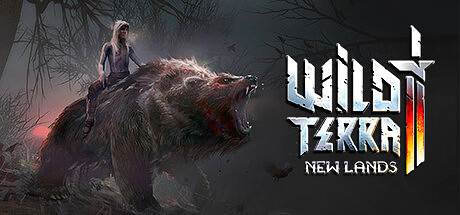
Wild Terra 2: the house that takes itself apart while you are away
It’s no longer being given away · it costs US$39.98 again
See it in the store ↗This page stays as a record of what was given away.
Availability can vary by region.
A classless medieval MMORPG shaped by the people who play it — and the community still standing is split over how much of their time this world has the right to claim.
A house that comes apart on its own
Stay away from Wild Terra 2 for a full day and the house you raised starts pulling itself apart, piece by piece, back into your inventory — a player with just 1 hour logged lays that mechanic out plainly, alongside a harsher detail: die in the open world and you lose everything you were carrying. There are no fixed classes. Whatever you hold in your hands decides your role in a fight, and every weapon, melee or ranged, brings skills of its own that surface only with use. Reaching the Master's Mark in any trade takes more than a click: it takes time, and memory of what has already gone wrong.
The list of trades runs long — builder, blacksmith, fisherman, healer, alchemist, baker, sailor, tanner, trader, farmer, jeweler — and each one levels with use, not with purchases. Pets feed into the same machinery: you capture them, tame them, breed them, and each inherits random bonuses as it levels, which turns raising the right animal into a gamble of its own. Players who want company form guilds to take on big bosses and dark dungeons; those without a group can head out alone to continents with biomes of their own, such as a Plague Island. Dungeon difficulty is the player's call, from Easy to Nightmare, and the reward climbs with the risk — including the risk of losing what you carry.
The merger that wiped out an entire stockpile
The studio's noticeboard, along this stretch, says nothing about new content: it talks about servers shrinking to the point of fitting inside one another. The seasonal Wild server was absorbed into Hades, Iris became part of Astra, Lux was merged into Gaia, and the auction houses of each pair were folded together too, as if two markets had turned into one overnight. Juvty Worlds treated the maintenance as routine: a notice about instability, thanks for the patience, subject closed.
You spend months building up a stockpile, walk into a server merger at the wrong moment, and watch half of it vanish in a restart you never asked for — that is what happened to a player with 520 hours in the game. Halfway into a character transfer, the destination server restarted, and half the stockpile was gone at a stroke: items, materials, weeks of work. Support is email only, plus a button buried in the interface; they got a ticket number but no way to follow the case, and waited a week with no reply. Over the same stretch, the studio also shipped a new combat skill, dual wielding, plus the option to pack up whole buildings — proof that the game is still moving, next to a reorganization that cost at least one long-time player dearly.
Runescape with dungeons, from someone a few hours in
A player with 18 hours logged sums the mix up as a cross between Runescape and a dungeons-and-dragons game, with a dash of Wurm Unlimited: crafting never suffocates, and the sense of progress never goes away. Another, with just 2 hours, is more sparing: slow, they call the pace, but not bad for a survival-and-crafting game. Someone past 160 hours of play has only one complaint left after the whole tutorial: sudden frame rate drops — the kind of small gripe that survives when everything else has talked you into staying.
At the far end of the hours, a German player with 1626 hours vouches for the balance: much of the content plays solo, a group or guild becomes mandatory only in specific places, and the in-game shop can be ignored altogether, since everything it sells can be reached without spending there. Another veteran, at 1709 hours, recommends the game flat out to anyone who likes sinking into a system for hundreds of hours after the rare item, the hard achievement, or the perfect combination.
Forty minutes are enough to see what it asks of you
One player with 1 hour logged says the first 40 minutes already made the pace clear: it would be heavy going. After a basic tutorial, the sums came to something like 8 to 10 hours a day just to progress comfortably — and right there the game drops your character into a multiplayer world where other players are quick to lift any resources left near your own base.
A Russian player with 460 hours forgives much of that for the friends made inside the game, but the list of complaints raised runs long: a small, repetitive map, no story to hold the setting up, the same daily quests as ever — kill wolves, collect hides, catch horses —, endless repetition, visuals that look a decade old, and a shop compared, with no charity at all, to the worst paid MMOs this player has seen. The math behind the paid subscription, they write, does not add up at all, and not one bug has been fixed in 3 months, though there is no shortage of them.
For another player, with 106 hours of play, the problem lies in the logic of the recipes: cheap items ask for a disproportionate pile of resources, while further on, at steel tier, the math flips and calls for less material than it should — as if every recipe had come off a dice roll. That count puts a single steel pickaxe at more than 20 ingots.
A Chinese player with 1079 hours warns newcomers: read every studio announcement when picking a server, because a world open for many months can be merged overnight into a newer one, and the compensation for that merger tends to amount to a fraction of what a single day of play brings in. A Russian player with 128 hours sums up what ties these complaints together: the game held their interest for a while, but the merger that slowed their server down stretched the road to simple blacksmithing skills far longer, and they stopped playing. The harshest criticism here is not about what the game lacks — it is about the time it asks back, and about who decides, from one day to the next, that this time is worth less than it was.
For the patience of a craftsman, not a tourist
Wild Terra 2 rewards you if you treat the trade and the slow climb as the game itself, not as a toll to pay ahead of the real fun — if you don't mind repeating the same harvest for weeks to unlock one new recipe, and logging in every day just to keep the house from coming apart. If Runescape or Wurm ever worked for you, this is the rhythm you will find here. But if you want a result inside one session on the couch, or can't stomach losing everything to a single death, or watching your own stockpile evaporate in a server merger someone else decided on, the game asks for a patience you don't have. Between those two audiences there is no middle ground — and it is that split, not a final score, that sums the game up.