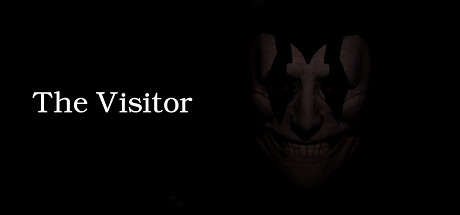
The Visitor: Rachel's book only ends if her medication holds out
No deadline: it stays in the catalogue until the store pulls it.
Claim it on Steam ↗You claim it in your own store account; Clairo doesn’t claim it for you.
Availability can vary by region.
A studio working alone, a rough reception, and the doubt running under the whole plot: what is a vision, and what is real.
Writing while the mind slips
Rachel is a writer, and she gets paid for the book only if she turns in the chapters on time. The trouble is that the medication keeping her functional is almost gone — and without it her nights shrink: sleep arrives sooner than it should and steals the hours she had left for writing. The longer you sit at the keyboard as Rachel, the further her mind slides into schizophrenia: noises and visions she wouldn't have if the medication were still enough, and it never becomes clear whether what she sees is real.
The game splits the work into chapters: finish one, rest, start the next. When the typing wears thin, it's your call to leave the desk and explore the farmhouse instead of writing — knowing that every such choice costs Rachel a little lucidity. Two game-controlled enemies prowl the house: one watches from a distance, the other comes straight at you. Sound carries the weight here, and the studio itself recommends headphones, because it's the ear, not the eye, that tells you danger is coming.
Two fixes, nothing new announced
The studio is Raining Glass Studios and nobody else, and after the game shipped on December 22, 2022, the only public posts it left behind were two patch notes rather than announcements: no expansion, no content reveal — just fine-tuning on two scares. The second night's enemy was repositioned to soften the transition, and the third night's was moved so the mechanic could teach itself without killing the player almost on sight.
Another fix closed a bug that left the book open on screen even after Rachel died at the computer — a small thing, but it shows that the line between writing and dying was, for the studio itself, the most delicate point in the game.
The repetition players wouldn't forgive
On Steam, where the player feedback used here comes from, most of the votes cast are negative, and the players who came away unhappy all point to the same thing: the chapters that ask you to type the same pages again drag, and that wears you down faster than the game can build the dread it promises.
The player who finished the first hour, on September 5, 2026, grants that the graphics hold the scene together, but a clown catches them off guard, turning up behind anyone who ignores the background noise — a scare they hadn't seen coming — and even frustrated, stopped short of writing the game off entirely: they've played worse. The one who didn't even reach the hour mark, on September 8, 2026, went the other way: to them, the house the story unfolds in looks more wrecked than a building condemned as unsafe, and that was enough never to go back.
Picture doing the same chapter a third time, knowing the repetition is supposed to be proof of Rachel's collapse — and feeling that it's the game, not the character, that has seized up. The mechanic built to mirror her unraveling is exactly what players single out as the game's biggest obstacle. It tries to turn fatigue into terror, and for these two players, fatigue won.
Who can stand doing the chapter again, and who quits in the first hour
If you play alone, in headphones, and accept that the scare comes from sound rather than sight, the bargain is yours too: accept that Rachel has to rewrite in order to move on, because it's in that starting over that the game tells the story of her illness. Rachel's illness was meant to bleed into the screen; for the people who played it, what it bled into was the pacing.
Anyone after polished sets or tight pacing won't find them here: the reception leans negative, and the complaint that keeps coming back is the repetition itself. That player gives up the moment they realize they're about to read the same chapter a second time.