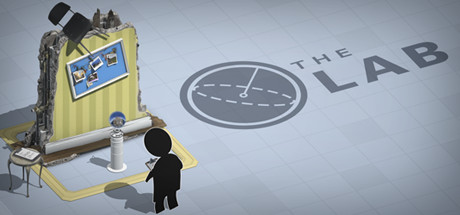
Valve hid a Dota 2 shop inside Aperture Science's virtual reality lab
No deadline: it stays in the catalogue until the store pulls it.
Claim it on Steam ↗You claim it in your own store account; Clairo doesn’t claim it for you.
Availability can vary by region.
The package rebuilds a human body out of CT scans and asks you to fix a broken robot — and the repair room is where the whole thing most often locks up on its visitors.
A room for every Aperture Science whim
One app hands you a slingshot and lets you level an entire Aperture Science warehouse without a shred of guilt; it hands you a bow and arrow to hold a castle against a stubborn horde of attackers; it lets you browse postcards of landscapes that sit on no map; it has you rebuild a human body with your own hands out of real CT scans; and one room over, it drops you into a fantasy shop lifted straight from Dota 2, artifacts, familiars and spells all for sale.
None of it is trying to tell a story. The point is to show, room by room, what a virtual reality headset can actually do. Valve built the package itself, set it in the pocket universe of Aperture Science — Portal's deadpan laboratory — and shipped it on Steam on April 5, 2016. It wants a Windows PC and a SteamVR setup, played standing or with clear space around you.
There is a repair room too, where Aperture dangles a place in the Aperture Science Human Diversity Outreach Program at anyone who can fix a broken robot, and an entire solar system to cross on foot, with no astronomer on hand to explain what you are looking at.
Launch-day ambition settled into small-patch routine
At launch the team said as much in public, on a Steam Dev Days panel: they were writing the rules of an unprecedented medium from scratch. There were no other virtual reality games that let you move around to serve as a model, so every room had to invent its own grammar.
Some time later Valve came back to the project to swap the abstract controllers for properly articulated hands, leaning on the finger tracking that shipped with the company's own newer headsets — a change that refreshed the feel of every room without promising new content.
Since then the updates have been spot fixes: one that gave the slingshot scene back to players running the app in Chinese and Japanese, and another for the bow that would fire on its own during the castle defense. Early ambition has given way to upkeep — the sort of thing you only notice if you open the package expecting something new.
Everyone visits; almost everyone comes back for the same room
A player at 24 hours, in a review dated September 12, calls the package more carefully made than most demos of its kind, and points out that this stands out even though getting in costs nothing. On October 2, another player with 2 hours logged says the amount of mileage virtual reality gets here caught them off guard, and still has praise left over for a dog that turns up in one of the rooms. Someone else, under an hour in on October 5, recalls seeing a stranger play it at a children's museum and then spending ten years hunting for the app's name again.
Ask what makes anyone open the package a second time, though, and the agreement narrows to a single room. At 5 hours, on September 25, one player says the bow and arrow of the castle defense is what still pulls them in; on September 29, with 2 hours on the clock, another agrees that of the rooms on offer, that one alone survives a repeat visit. It is the scene that wins over even the person who meant to wander in once: loose the first arrow and you understand why so many people return for that room and nothing else. The solar system, the postcards, even the shop on loan from Dota 2 keep the charm of a single visit — seen, and not seen again.
The complaint that keeps coming back is always the hand that never arrives
For one person the trouble starts at the attempt to open the app: in a review filed in 2018, it crashes every time, and crashes again on the opening presentation the rare times it does start — and they point out that others in the community report the same crash. In a review from 2022, with 3 hours logged, the story takes a different route to the same dead end: it runs on the PC, but it will not reach that person's Quest 2 headset, and the experience stops opening at all.
You come in to try it and you stall in the very room that is supposed to sell the whole package. The most recent account, 1 hour logged on October 3, tries to be fair: a decent introduction to virtual reality, it says, if the thing stopped there — but the robot repair room locks up on entry and the secret shop never quite registers your hands. For that person the fault stings more because of whose name is on the package: watching Valve, author of the virtual reality format the app is meant to show off without a flaw, leave a problem like that unfixed is a letdown. The offer to think it all over again, should the fix arrive, still stands.
The bow justifies the visit; the rest is a museum you walk once
The package asks for specific hardware — a Windows PC and a SteamVR setup, standing or with clear space around you — so the first question is not about the content at all: it is whether your home has the headset that opens this door. If that gear has been sitting on a shelf unplugged, here is the perfect excuse: walk in, loose an arrow at the castle defense, have a go at the broken robot in the repair room, walk out.
Anyone after a story with a beginning, a middle and an end will not find one here — and does not need to: the package never promises one, and the rooms do not talk to each other. Anyone counting on a standalone headset, without the full tracking SteamVR expects, runs into the same wall as the person who tried a Quest 2 and stayed stuck outside.
Aperture Science builds a human body reassembled from CT scans and a whole solar system to cross on foot, in one and the same package — and by the players' own accounts, the reason to return is the bow and arrow in a single room. The shop on loan from Dota 2 barely comes up after that first visit: a museum piece, not a reason to decide.