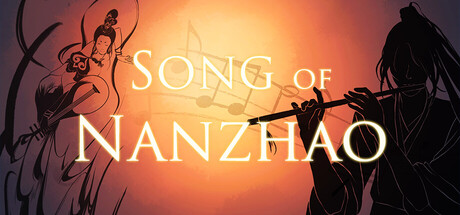
Song of Nanzhao: a voiceless musician in a village torn by war
No deadline: it stays in the catalogue until the store pulls it.
Claim it on Steam ↗You claim it in your own store account; Clairo doesn’t claim it for you.
Availability can vary by region.
In 798 AD, the only way to speak is to play — and every note doubles as a tool.
Voiceless in a frontier kingdom
You were born without a voice in 798 AD, in a frontier kingdom. The Tang dynasty is pressing men into service, Nanzhao is locked in conflict with it, and your only line to the world is music.
You play the court musician: mute from birth, yet never truly voiceless, as the story itself makes clear. The game has you walk a Chinese village in wartime, meet villagers scarred by the hardships of the era and win their trust with empathy and kindness. Conversation happens in sound, because every object has its own, and you learn and record the melodies hidden across the world.
The developer is Lost Echo, the publisher is Shepherd Games, and the game came out on Windows on August 29, 2025.
Five elements, five notes
The scale is pentatonic, built on the five elements, and each note works as a tool: use it to talk to a villager, unlock a secret or pick up a key item. The inspiration comes from Chinese folk music, Nanzhao's Fengsheng in particular.
Picture yourself facing a sealed path and realizing the way out is a melody, not a key. Or handing a villager the right song at the right moment. That is how the game asks you to move the story forward and awaken forgotten memories.
A chapter to listen to, not to beat
What the store is offering is the first chapter, a slice of the full game rather than the whole story. The war is the backdrop; what you actually do, the whole time, is listen, record and play.
Fans of slow-paced puzzles, conversations with troubled characters and sound as a mechanic will feel right at home. Anyone looking for action, or expecting a long, self-contained game, will put the controller down early: the question here is whether music can open a path to peace.