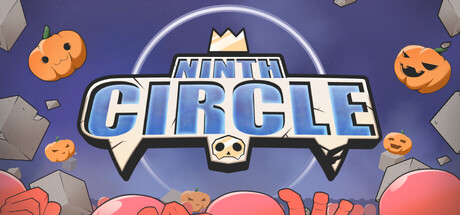
Ninth Circle and the difficulty-20 wave nobody has come back from
No deadline: it stays in the catalogue until the store pulls it.
Claim it on Steam ↗You claim it in your own store account; Clairo doesn’t claim it for you.
Availability can vary by region.
A horde shooter built out of magic cards: nine circles of progression, and a ritual that makes failure hurt.
Nine circles, a god named Geiem, and cards that make you pay for the mistake
The legend circulates inside the game itself: anyone unlucky enough to land on a difficulty-20 wave is never heard from again. Ninth Circle's special waves run from 1 to 20, and the store page treats that reputation as a fact of its own world rather than a warning about the difficulty.
You are locked inside Geiem's game, and the only way out is to carry out rituals, climb the nine circles of magic and survive the hordes of those who fell along the way. The hordes have a name: Hollows, earlier players whom Geiem converted and keeps under his control, each type carrying an ability of its own that betrays who it was when the siege broke it.
The arsenal is assembled out of magic cards — powers, weapons and items that grow stronger across those same nine circles, paid for with evolution credits handed out by rituals and by tasks that please Geiem. Botching one of those rituals costs more than time: the page states flatly that failure brings negative consequences for the cards themselves, which turns every ritual into a wager. The game is signed and distributed by vojmir.com, and the store page still lists the release as "Coming soon" — not an early access badge, just the state the page records. It is Windows only, and one person per run: it tallies Steam achievements and allows family sharing, but there is no partner inside the run itself. There is no DLC — there is the base game and its nine circles.
Who the ritual gamble pays off for
Ninth Circle is for players who want their horde shooter to carry weight: losing a ritual costs part of the card itself, and that kind of punishment separates the people who play for a quick thrill from the ones willing to live with their mistakes. It also suits players who go it alone and are perfectly fine that way — there is no two-player mode inside a run, only family sharing, which lends out the account rather than the session.
It is not for anyone after company in the middle of the horde: the genre usually arrives in pairs or in squads, and that door simply isn't here. Nor is it for anyone who wants a guarantee up front — that isn't the decision this piece settles. The question it settles is whether the premise alone, nine circles and the legend of wave 20, is enough to make you open the game.