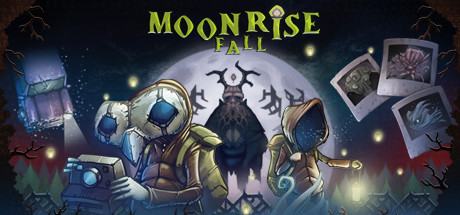
Moonrise Fall: the forest only opens once you have learned its controls
It’s no longer being given away · it costs US$9.99 again
See it in the store ↗This page stays as a record of what was given away.
Availability can vary by region.
The hard part isn't the forest's puzzles — it's the controller that decides who ever reaches them.
The one input that decides who gets into the forest
Two reviews on Steam, where the game is sold, share one odd detail: a playtime counter frozen at zero. One person never got past the moment the photography mode asks for an input that the keyboard simply ignores. The other put the controller down as soon as they tried to move around the forest, complaining about the controls — and the store page lists full controller support, so that isn't just a figure of speech.
On the far side of that entry barrier stands the boy at the center of the story: he lost his parents in a car crash and wanders a supernatural wood carrying a flashlight, a camera and a journal full of clues, hunting for hidden creatures to photograph and for a coded language nobody else can read. The world shifts on its own around you — rain falls, the wind picks up, the sun goes down and the moon rises in five different phases of light — and you can step in by playing the kalimba the boy carries, which calls up rain or wind at the right moment.
The game's own page borrows a player's phrasing to describe that mood: it likens the experience to Henry David Thoreau's book about living alone in the woods, crossed with an opium dream. That is not the usual pitch for an indie adventure, and it is the clearest sign that what's on offer here is contemplative rather than fast.
A small studio that didn't walk away from its game after launch
The game first came out in May 2019, made by the independent developer Made From Strings and published by GrabTheGames. Release didn't settle the matter: the studio brought the forest to Switch in July 2022 and to Xbox in May 2023, keeping the project alive one platform at a time.
Open the studio's wall of posts and you find little marketing and a lot of the routine of people holding up a small game on their own: a Halloween announcement, a papercraft ornament ready to print out and hang on the tree, and a post signed simply 'Chris', thanking everyone who played the demo of a new project and asking them to put that next game on their wishlist.
While handling that upkeep, the same team was trying to get a new game off the ground, Murder On Space Station 52, looking for player backing with a crowdfunding campaign. It's the portrait of a small studio torn between propping up what it has already released and trying to start over.
Get past the early confusion and the slowness becomes the point
Picture going in with no instructions at all: you fumble the first controls, get a fair amount wrong, and only then does the machinery click. That's how it went for someone who needed 4 hours to get past the initial strangeness — that player calls the pacing an acquired taste, admits the style isn't really theirs, and recommends the game anyway.
The longest write-up on the favorable side comes out of 29 hours of play, dated late September 2026, and singles out the forest's atmosphere and mystery as what carries the whole experience. Another player, 8 hours on the clock, recommends it while pressing one practical point: pay attention to the journal and it tells you where the creatures are, and the kalimba mechanic reminded them of the kind of instrument that turns up in Zelda.
A third player, at 20 hours, praises the mix of exploration and photography: every new creature is a reason to leave the straight path and look around. It's the pattern that keeps repeating among the people who liked it — the slowness that drives one part of the audience away is exactly what holds the rest.
The right controller separates who stays from who quits
Picture reaching the scene where the game asks for the input that opens the camera, pressing the button it points to, and nothing happening. That's what pushed at least two people out of the game with no time at all on the clock: one is stuck at exactly that spot, the other boils the problem down to sticky controls and suggests they only work properly with a controller — the same accessory that, for anyone who persists, ends up becoming part of the mood.
Some complain for a different reason: the boy walks far too slowly, and the story doesn't explain itself along the way, leaving a more philosophical air than that player expected. At 4 hours played, in July 2026, they grant that the puzzles are interesting but fault the game for offering no neutral option to weigh in — with no middle ground, anyone who has a reservation on top of the praise ends up marking it as a thumbs down.
Two smaller gripes come from outside the game's language: one person notes the interface has no Russian option, another finds the exploration repetitive well ahead of the story's end. There's also someone aiming at the hero's face: at 3 hours played, that person describes the character design as too strange to warm to, the only complaint in the batch that goes after the look rather than the pacing or the controls. Add those voices up and a pattern emerges: almost everything negative is born in the first few minutes, at the point where the controls still haven't made sense — and those who get past it rarely come back to complain again.
Who this slowness is for
Moonrise Fall asks two specific things of anyone who sits down to play: a real controller in your hands, and patience for the first five minutes, which nobody properly explains. Pick up a controller and the forest opens; stay on the keyboard and you'll most likely wrestle with the controls without ever reaching the good part.
Whoever accepts that cost of entry gets a forest that changes on its own, an instrument for calling up rain and a collection of creatures to uncover at their own pace, with nobody pushing them toward the next discovery. It's a game to play slowly, alone, in a session with no set finishing time.
Few people have anything to say about this game, but among those who make it past the early oddness the verdict keeps repeating — and whoever gets stuck on the first input that won't respond never forms an opinion about the forest at all, only about the button that failed to work.