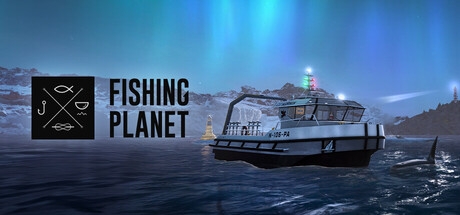
Fishing Planet: the fish of a lifetime, lost to a crash
No deadline: it stays in the catalogue until the store pulls it.
Claim it on Steam ↗You claim it in your own store account; Clairo doesn’t claim it for you.
Availability can vary by region.
A fishing sim that takes the waiting as seriously as the strike — and charges anyone who wants to move faster than patience allows.
A simulation that punishes impatience
After 228 hours in the game, one angler lost the biggest fish of a whole career to a system crash — right at the strike, on an ocean map set in Japan. The rage went on the record in block capitals, in a review posted on August 9, 2026 that swore at the game's own creator. It is the kind of scene that only happens when a simulation is taken seriously enough to hurt when it fails. The store page also lists 73 content packs sold separately, a figure that helps explain why so many of the people who walk in without paying anything end up complaining that going further has a price.
What holds up the realism is the sheer number of variables that interfere with a day's fishing. Over 300 species react to the season, the weather, the time of day and the current — that is not scenery, it is what decides whether the bait you picked is worth anything. The game's 27 waterways reproduce real landscapes, each with its own bed, vegetation and climate. The ocean boats take 2 to 5 friends out on the same trip.
Off the water, the game organises people too: you can set up a fishing club, talk with the people you play alongside and enter tournaments that pay out a personal score and a place among the best. All of it was made and is also distributed by Fishing Planet LLC itself, which put the game's first version on Steam on August 28, 2017.
Between tournaments, one line about what comes next
The studio's own noticeboard is mostly tournament calls — the sort of thing that matters to whoever is already playing at the moment of the announcement, and that does not survive a reading once the event is over.
The exception turns up in the game's anniversary post. There the team says that while it was finishing the job of bringing Noomaa Kuda Atholhu, in the Maldives, to consoles, it was already testing a very different stretch of water in-house: Norway, with a strong current, storms and a new way to fish. It is the only line in the material that talks about production rather than an events calendar, and it shows a game that still changes geography long after it started running.
Patience gives it a pass, the wallet does not
On Steam, where the game also lives and where the player write-ups used here come from, most of those who pass through it come away in favour, even with a grumble about something along the way.
A French player, after 83 hours, describes the progression curve as the best balanced they have seen in a Free to Play game: you can climb without paying for a subscription, as long as you bring the patience and read each fish's profile to pick the right bait. A Czech player, at 286 hours, points the game above all at people who like real fishing and slower games, and calls the simulation addictive without it turning repetitive.
A real-life angler off-screen sums up the other side in a line of their own: after 54 hours, they say the care in the simulation rings true because they fish in real life too, and there is only one complaint, that the good content sits locked behind a payment. It is the same praise that repeats from review to review: the water, the fish behaviour and the patience the game demands are convincing; what is not convincing is having to pay to unlock the good part.
When the same game becomes a reason to rage and to walk away
The player with the 228 hours and the fish lost to the crash uses that same review to go after progression as well: levelling up gets called a near-random lottery that rarely favours anyone who does not pay, and the catching routine gets described as wear with no end to it.
Another player, at 82 hours, boils down the trouble with the paid packs: buying one does not hand over the content for good, only temporary access that expires after a while, and the advice is to stay away from those packs in particular. A German player, with 140 hours, tells of dropping the whole thing after some ten years of following the game, and puts the reason in one bitter line: what used to be good has turned, for them, into a product built only to sell.
A Russian player, with 278 hours, tells a stranger story: running any program that had nothing to do with the game was enough for the anti-cheat to hand out a ban they describe, in bitter jest, as near eternal. A more technical review, at 112 hours, likens the catching meta to games famous for grinding repetition and points out that without a paid subscription the amount asked for progress gets bigger still. And two people, each with 0 hours logged, never got as far as playing: both complain that the game crashes without even getting to the loading.
Right for the calm, wrong for anyone chasing fast levels
This is a game for people who like real fishing, who have the patience to study every species and who do not mind playing alone or sharing the boat with friends — it exists for Windows, Mac and Linux, so the platform is no excuse. It is also a game where a good part of the audience decides, sooner or later, to pay for something: among those who recommend it and those who do not, the most repeated complaint on both sides is much the same, only in different tones — what costs nothing opens the door, the rest charges time or charges money.
It is not for anyone after a quick result: one player writing in English tells of being forced up to level 54 just to start fishing in salt water, and still recommends the game, with the warning that anyone who dislikes fresh water has a long wait to get there. Downloading costs nothing; staying, if you want to go fast, costs patience or costs payment — and the game makes it perfectly clear which of the two you are about to spend.