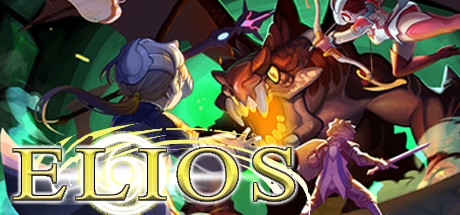
ELIOS VR: the soul slips out of the body right in the middle of the boss fight
No deadline: it stays in the catalogue until the store pulls it.
Claim it on Steam ↗You claim it in your own store account; Clairo doesn’t claim it for you.
Availability can vary by region.
A massively multiplayer virtual-reality game from a small studio promises giant bosses and a world at war — and delivers, along with them, the rough patches typical of an early-access title the studio itself stopped updating.
The soul slips free, and that is where the Ghost is born
Elios was, for a long time, a peaceful place. That peace ended when an unnatural moon, far too bright to be real, rose in the sky — and what the locals came to call the portal to the alien world began letting monsters no one had ever seen cross over to this side. The heroes who stand against them forge a pact with the land itself: while that contract holds, no one else's will can kill them. But in the middle of a fight against a giant boss, the soul can slip out of the body for a while — and it is in that gap that a sealed power awakens, one reserved for a class called the Ghost.
Outside the Ghost's trance, players pick from three basic classes: the warrior holds the front line with a one-handed weapon and a shield, the archer strikes from afar with arrows, and the mage attacks and supports the party with magic. The world splits into five fields, each with monsters of its own temperament, and you push forward mission by mission. Up close, you swing the sword; at range, you loose arrows; and to enchant an item, you trace in the air the runic symbol that triggers the effect. This is a game built not to be played alone: the story itself explains that the giant bosses demand more than one hero at a time — and that, further on, changes the math of who the game is really for.
The studio that decided to stop charging players to team up
ELIOS VR left closed testing and entered early access on February 1, 2021 — FINGEREYES had shut down its handout of beta invitations back in December of the previous year, letting everyone know that anyone already holding a key could keep playing. The first updates, still in February, dealt with small fixes: teleport distance, level text that displayed wrong, monsters that took no damage from certain blows. May of that same year brought the turning point: the studio announced that the game would no longer charge for entry, with the stated goal of gathering more people playing at the same time, and promised reward gear to everyone who had bought the game during the paid phase. After that, the studio's board went quiet.
The ones who recommend it also spell out the flaws
One player who spent seven hours in the game, in February 2021, praises the fluid interface and the detail on characters and enemies, but asks for a less repetitive soundtrack and less recycled scenery — and recommends it anyway. Someone who came back much later, in November 2025, for an hour-long session, describes the feeling of being inside the world and combat that varies with different weapons and abilities, without failing to note frame drops and small glitches. Between the two, there is the one who recommends it out of irony — sums up their own experience as bad and marks it positive all the same — and the one who recommends it with a warning built in: cautions that the thing still feels like the studio's own testbed, and that it only pays off for whoever is willing to be part of that test.
Kill, come back, kill again — and never feel yourself level up
The mission that repeats is always the same one; only the monster's name changes: kill a target, head back to the post, take the order to kill the same target a little further along. In February 2021, a player who hit level 100 in a few hours of play praised the graphics and the combat physics — the only two hits on a much longer list of snags: a soundtrack with no volume control of its own, enemies that sometimes attack and sometimes ignore the hero, teleporting that flings the character to the wrong side of the map. Another player, in that same February batch, turned level 52 with two hours of play and felt no progress at all: just numbers climbing on their own.
Moving on foot is slow enough to force teleporting as the only workable way to get around, and the weapon-equip menu asks for patience: open the inventory, tap twice, wait. Character customization disappoints, and the non-player characters answer with nothing but stray lines of thanks. A Korean player, in February 2021, complained about the lack of subtitles in their own language, liked the idea of drawing symbols to cast magic, but got stuck on controls compatible with only one kind of device and gave up before finishing an hour of play.
It only works with company — and the rest is patchwork
The story warns up front that the giant bosses will not fall to a lone hero — and that is where the real test of ELIOS VR lies: it only delivers what it promises when someone else steps into the room beside you. Without a partner, what is left is the bad half of the package, the same half that comes up in write-up after write-up: kill and come back, teleport for lack of any other option, wait for the inventory to release the next weapon. The soul slips out of the body only when the script decides; the jammed menu is yours the whole time. Installing it pays off for anyone up for pulling a group together and patient with a project the studio itself stopped updating. Anyone playing solo, or anyone already tired of the repeated mission, finds no reason here to make an exception — and anyone who depends on Korean subtitles is still without them, the same complaint as those who played in the earliest days.