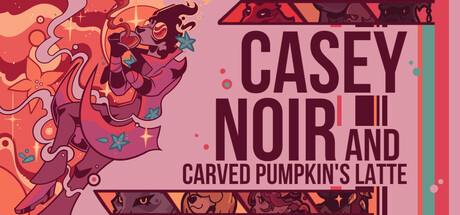
An immortal detective walks into a masquerade — and someone is already dead
No deadline: it stays in the catalogue until the store pulls it.
Claim it on Steam ↗You claim it in your own store account; Clairo doesn’t claim it for you.
Availability can vary by region.
The art wins over everyone who plays it; the writing is where the investigation splits.
A masquerade with one guest short
Casey Noir is a brooding detective who doesn't age, summoned to a Halloween party at a Gothic hotel that stands alone atop a hill, by a face he recognizes the moment he arrives. The gathering doesn't last: before the greetings are even over, one of the guests turns up dead, and the killer is still in the room, hidden behind one of the party's masks.
It's a point-and-click game: you roam the hotel and its grounds, question suspects and gather clues, trying to see through masks that hide, distract and lie. The whole investigation fits into a single sitting — roughly two hours — which keeps the pace moving before it has any chance to cool off.
It comes from the studio Nik Rouz and Friends, which also publishes its own game; the hotel opened its doors on October 1, 2025. Steam files the title under casual and indie, a pair of labels that suits a story built to fit into an afternoon.
The art that wins you over first
One player who closed the case on July 2, 2026, after two hours with the game, boiled the verdict down to a single point: the art convinces, and the story does its job as a solid opener for the October season. A few days later, another write-up — also logging two hours — went further: it called the linework cohesive and said the story takes a while to get going, but once it catches, it grips, above all when the time comes to cross-reference clues and piece the evidence together.
Both readings meet on the same point: what holds you is watching the scene and fitting the pieces together, not memorizing any rules — and that is exactly where the objection from the other side takes aim.
The same art, now a complaint
On the other side, someone who finished the game with two hours on the clock, on January 16, 2026, sums up the opposite: the art is the only thing holding the game up — and even that gets in the way, because the visuals are so stylized that it's hard to tell where to click. The core complaint is about method: the game tells instead of showing, piles on text, and still needs a whole epilogue just to explain why the killer did what he did.
One hour was enough, on November 5, 2025, for someone else to conclude that the problem isn't that it's bad — it's that it's dull. The characters get lost in an orange-and-purple palette that tires the eyes, and with no voice acting — understandable on a small budget — it's the text that has to carry everything alone. Central plot concepts arrive fully formed, with no explanation at all, and the reader is left behind.
The Portuguese-language write-up, from March 15, 2026, after three hours of play, is the harshest: the characters are introduced badly right from the start, and the author himself breaks off the scene to speak directly to the player, as if everyone already knew that universe. The investigation gets going nicely once it starts, but the ending feels wrapped up in a jolt, with little care for who the culprit is and why.
For those with the patience to read
Few have played it so far, but those who attended the party have, for the most part, come away recommending it; the dissenting voices that do exist argue less about whether it's worth the time and more about whether the writing holds up what it promises.
It's worth it for anyone willing to take on heavy reading in exchange for a beautifully drawn scene and a mystery wrapped up in a single sitting; anyone who wants to decipher clues without leaning on paragraphs of explanation will hit the same walls of text the Portuguese piece already hit, and will give up at the same point.
The party's masks hide the killer from the first minute to the last; the writing's masks hide, for far too long, whether the story behind them holds together.