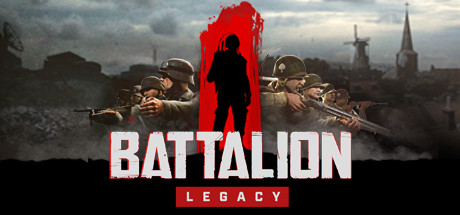
Battalion: Legacy and the server that never reached South America
No deadline: it stays in the catalogue until the store pulls it.
Claim it on Steam ↗You claim it in your own store account; Clairo doesn’t claim it for you.
Availability can vary by region.
Part-owned by Square Enix and handed back to the studio seven years later, this trench shooter closed its chapter with refunds for backers who never played the version they funded.
Seven years after the campaign blew up, the studio refunded the backers who never played
Seven years after its Kickstarter blew up, the studio behind Battalion: Legacy came back to the public — not with news, but with money to give back to people who never played the version they funded. The full refund was open to every backer, whatever platform they had picked and whatever they had pledged at the time.
The road to that ending led through a big partner. In November 2018, Square Enix bought twenty per cent of BULKHEAD, the studio behind the game, and began publishing it under its label for independent work. In August 2022 the arrangement ended: the studio itself announced, in its own name, that it had formally closed out the relationship with Square Enix, saying it wanted to put the focus back on the people playing. The answer was to stop selling the game. It was renamed BATTALION: Legacy and shipped as a final update, with no date set for pulling it from the catalogue.
What was left over was a debt to one specific group: the people who had backed the original campaign expecting a console version that never came to exist. The studio acknowledged the awkwardness when it announced the 2022 change, and it was that same group that heard, in 2023, about the full refund. It is a rare kind of ending — a studio handing money back to people who may well have forgotten they ever pledged it.
Five on five, bullet for bullet, no special powers
Battalion: Legacy bets everything on precision: five on five, infantry only, no special powers and no magic abilities — just a bolt-action Kar98, a Thompson to cover a teammate's push, and the footwork of a player with a sense of when to stop running. In Wartide, one team attacks and the other defends, and the first to close out sixteen rounds takes the win; in Showdown it comes down to one rifle, one target and the question of who lands the shot first. For anyone who wants fewer rules and more mess, Arcade mode puts out flags to capture, ground to hold, and a separate tally of headshots.
The setting is the Second World War, and the game does not stop at the United States against Germany: the Soviet Union comes in on the Eastern Front, with the period arsenal that implies, from the bolt-action sniper rifle to the fast-firing submachine gun. On top of the match itself sits a season system — challenges, medals, a ranked climb and war paints for the weapons, handed out at no cost every season — plus a replay tool with a camera you can move anywhere and both first- and third-person views. Anyone who wants to host their own corner downloads the dedicated server and modding files, at no charge, and runs the game however they like.
It is a set of tools and modes built for serious competition, with FACEIT wired in directly: matches, tournaments and skill-based ranking. What remains open is whether there are enough people out there to fill that arena.
Playing it to decide whether the studio's next game is worth trusting
The players who recommend this one almost never talk about it on its own — they talk about it as a test. One player who turned up on 12 September 2026 and spent two hours in matches with at most two other people describes the feel: a stripped-down take on a Second World War Call of Duty, shooting that connects, a slow pace that makes aiming easier, a varied weapon roster with no customisation — and the lack of it never hurt. That same player says they went in to decide whether Wardogs, the studio's next project, was worth trusting, and came out with little faith that the future launch would bring anyone back to that all-but-empty room.
That mistrust hardens in the ones who stayed longer. A player with seventeen hours on the clock sums up the relationship with the studio in one bitter line about being taken in twice — once by this game, once for trusting Wardogs all over again. Another, with no hours on record, writing on 28 August 2026, says the same thing a different way: the game is good, it just has no players, and they are only there because of Wardogs. Liking this game, in this crowd, means using it as a sample of the studio — evidence for whether the next slice of spare time is safe to hand over.
The server missing in 2018 is still missing
The harshest criticism is not about bugs or balance — it is about geography. In April 2018, with forty-two hours already logged, one player wrote that they genuinely wanted to recommend it: the feel struck them as close to the Second World War classics, the mechanics simple, easy to pick up coming from another shooter, the look deliberately dated instead of realistic. They waited to see whether the core problem would be fixed. It was not: with no South American server, latency made matches impossible, and that, and only that, is what turned the verdict against it.
The same complaint crosses the years without a word changing. In July 2018 another player, four hours in, was already describing the game as abandoned and empty. In October 2019 a third, with three hours, added lopsided balance to the list — weak German guns, apart from the sniper rifle that kills anyone; American guns favoured; and on both teams, bots that miss everything on one side and never miss on the other — and signed off recommending a look at no cost and never a penny spent on it. In September 2026, in a Spanish-language write-up, the memory turns into bitter praise: it feels like a Call of Duty of that era, the kind worth sinking hours into without a second thought, if only the game were not dead.
The day BATTALION: Legacy lost its price tag for good should have been the turning point. It was not: on that same 17 August 2022, more than one player wrote, each independently, about the same detail — not a single server under one hundred and fifty of latency. One of them, six hours in, described the oddest problem of the lot: kill someone, turn your back, and they are standing right there five seconds later, behind you; brush against a teammate during a match and both of you lock in place. Another, one hour in, wrote off the menu as something out of an unfinished build and the content as thin — two modes, that was it — even with the barrier to entry gone. Making the game permanent did not fix what had been breaking the experience for far longer than that: it brought new people in to trip over the same hole.
Who wins the match, and who finds an empty queue
For anyone with a friend or two willing to come along, living within reach of a server that works, Battalion: Legacy still delivers what it promises: a rifle that hits, a team that needs tactics, no customisation shop pulling your aim away. For anyone playing alone from South America, hoping to find enough people to fill a match, the answer has already been written out again and again, from 2018 to 2026, landing in the same place every time: the nearest server still belongs to somebody else.
That leaves the people who only want to take BULKHEAD's measure and decide whether to hand their spare time to Wardogs. For that reader, getting in costs nothing but disk space — but what they will find is not a verdict on the next game: it is the empty room the studio left behind as it moved on. The entry is the only thing that costs nothing; the server close to home still belongs to somebody else.